Anxiety Free Dental Care: How to Tell the People You Love
Heads up: this article contains affiliate links. If you buy through them, we may earn a commission at no extra cost to you.
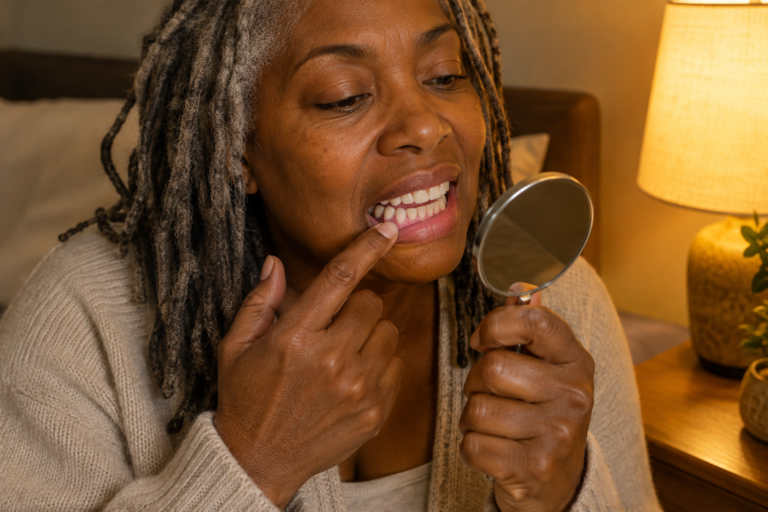
If you have been quietly dreading your next dental appointment, cancelling at the last minute, or simply pretending everything is fine, you are not alone — and you are not unusual. For many women over 45, anxiety free dental care feels like something that happens for other people, not for them. The fear is real. The avoidance is real. And so is the silence.
This article is not about your teeth. It is about the people sitting across from you at the dinner table who have no idea what you are carrying.
Why We Hide It
Dental worry is one of the most quietly kept health burdens there is. Part of the reason is practical — it is easy to reschedule an appointment, easier than, say, skipping a symptom that sends you to urgent care. But part of the reason is something more personal.
There is a voice that says: ‘This is embarrassing. Adults do not feel this way. I should just go.’ That voice sounds reasonable, so most people listen to it. They reschedule. They say ‘I have been meaning to book that.’ They change the subject when dental topics come up at family gatherings.
Another part of hiding it is shame around the mouth itself. Worrying about breath. Worrying about what the dentist will find after a long gap. Worrying about what a spouse or adult child will think if they know you have been avoiding care. It becomes a layered thing very quickly — you are not just hiding the dental worry, you are hiding the hiding.
What Your Silence Costs You in Relationships
When we hide something from the people closest to us, it does not disappear. It tends to come out in other ways. You may become short-tempered on the morning of an appointment you have finally forced yourself to book. You may avoid conversations about dental care entirely. Your partner may notice you seem distant and have no idea why.
Adult children, especially those who are health-conscious themselves, sometimes sense that something is being withheld. They push for answers, and the conversation gets awkward fast. Or they do not push, and a quiet wall builds up.
None of this is catastrophic. But it is unnecessary weight. And once you say the actual thing out loud — ‘I have real anxiety about the dentist and I have been avoiding it’ — most people around you respond with far more warmth than you expected.
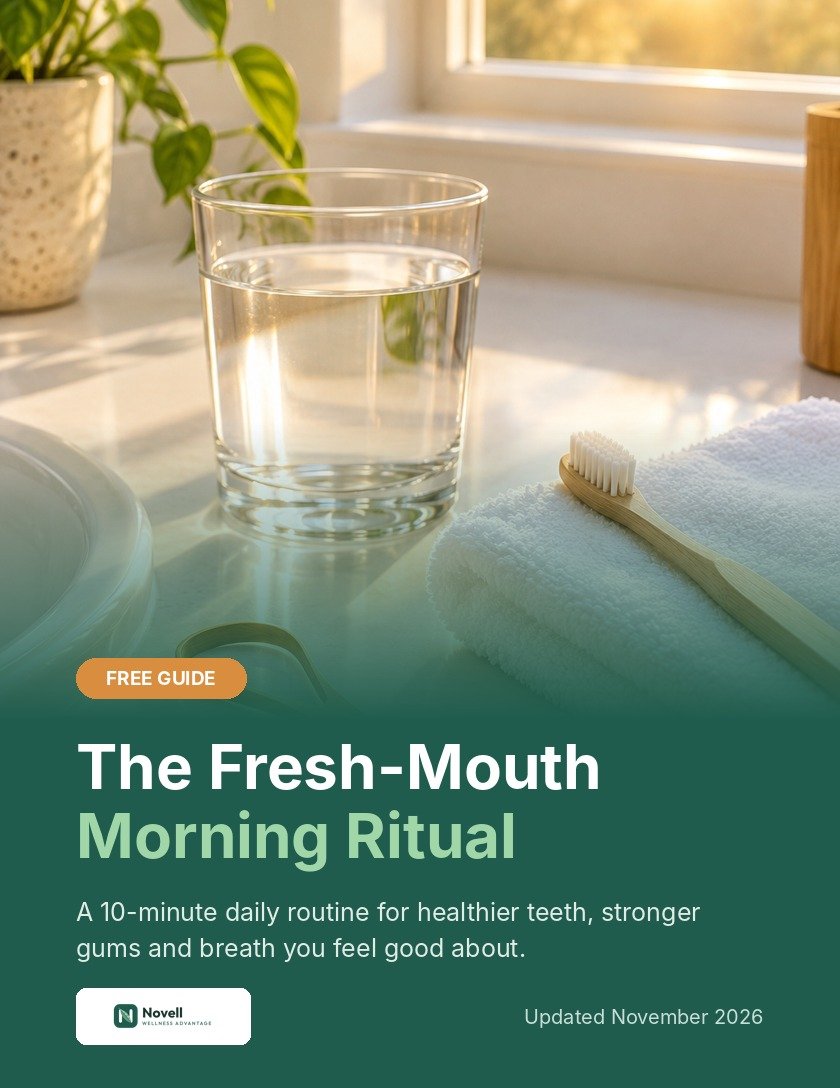
Free guide
The Fresh-Mouth Morning Ritual: A 10-Minute Daily Routine for Healthier Teeth, Stronger Gums, and Breath You Feel Good About
Download our free 10-minute morning ritual guide and build a simple daily routine that supports your teeth, gums, and breath — no expensive products required. Enter your first name and email and you’ll get it right away.
You’ll get the guide right away, plus a few short tips by email. Unsubscribe any time. Privacy Policy
How to Start the Conversation With Your Spouse
There is no perfect script for this. What matters is that you go first. You do not have to explain everything at once.
Some ways women in this situation have opened the conversation:
- ‘I want to tell you something I have been keeping quiet because it embarrassed me.’
- ‘I know I keep putting off the dentist. It is not laziness — I have a real fear about it and I am trying to figure out how to handle it.’
- ‘I could use your help with something. I am anxious about dental care and I have been avoiding it longer than I should.’
Your spouse does not need to fix it. They do not need to have answers. What most people want most when they finally say something vulnerable is simply to be heard without judgment. Give your partner a chance to do that before you assume they will not.
If your spouse tends to default to problem-solving mode, you can say: ‘I am not looking for solutions right now. I just wanted you to know what has been going on.’ That one sentence does a lot of work in a lot of relationships.
How to Talk to Adult Children About It
This one feels different for many women. There is a protective instinct — you spent decades being the calm one, the capable one, the one who handled things. Telling your adult children that you are anxious about something as ‘manageable’ as dental care can feel like showing a crack in the foundation.
It is worth asking yourself: would you want your own child to feel they had to hide something like this from you? Most mothers answer no, immediately.
Adult children are often more resourceful and compassionate than we give them credit for. They may know of approaches that have worked for friends. They may offer to help you research options. They may simply say ‘Mum, I had no idea — that sounds really stressful.’
You might also find that the conversation opens something up on their end. Many adult children carry their own unspoken worries about aging, dental bills, and health, and hearing a parent speak honestly creates permission for honesty to travel both ways.
What to Actually Say to a Dental Provider
Once you have let your family in, the next step — if you have not already taken it — is letting your dental provider in too. This matters more than many people realise. When a provider knows that anxiety is part of your picture, they can adjust how they communicate, how much they explain before beginning any procedure, and what pace works for you.
Telling a dental provider you feel anxious is not a complaint. It is useful information that helps them help you. Cleveland Clinic’s guidance on this is worth reading: tips for managing dental anxiety.
You can say something simple: ‘I want you to know I find dental visits difficult and I do better when you explain what is coming next.’ Or: ‘I would like to agree on a signal I can use if I need a break.’ Most providers will respond well to this. Those who do not are probably not the right fit for you.
When Dental Worry Starts to Affect More Than Appointments
For some women, the worry does not stay at the level of appointment-dread. It spreads. It affects how they feel about their smile in photos, their confidence in social situations, their sense of control over their own health. If that sounds familiar, it is worth naming that too — not just to your family, but possibly to a professional you trust.
There is a recognised connection between how we feel about our oral health and how we feel about ourselves more broadly. If dental worry is affecting your daily life, reaching out for support — whether from a dental provider who takes a patient-centred approach or from a mental health professional — is a reasonable step. This article from Cleveland Clinic looks at the connection between oral health and broader wellbeing in plain language.
You do not have to be in crisis to ask for help. You just have to be willing to say the true thing to one person who will listen.
A Different Kind of Daily Habit
Some women who are working toward anxiety free dental health also find value in looking at their daily oral habits through a different lens — one that feels gentler, more aligned with how they think about the rest of their health.
If you are someone who reads ingredient labels, thinks carefully about what goes into your body, and gravitates toward approaches that support the body’s natural processes, it may be worth learning about the role the oral microbiome plays in gum and tooth health. The idea that the balance of bacteria in the mouth matters — not just mechanical brushing — is an area of genuine interest for people who prefer a whole-body perspective.
According to the vendor, ProDentim is a chewable probiotic tablet formulated with 3.5 billion probiotic bacteria (the vendor’s figure) and a blend of nutrients, with the goal of supporting the natural environment in the mouth. If that kind of approach interests you, you can read more about how it works and what is in it on the product page linked below.
The Most Important Step Is the First One
Anxiety free dental health does not begin in a dental chair. It begins in a conversation — with yourself first, and then with the people around you. You do not need to have a plan before you say something honest. You do not need to have already solved the problem. You just need to stop carrying it alone.
The people who love you are more capable of handling the truth about what you are going through than the silence you have been offering them in its place.
If you are exploring natural, probiotic-based approaches to supporting your gum and tooth health, the ProDentim product page has a plain-language overview of the ingredients, the formulation, and how it is designed to work. It is a good starting point if you want to understand what is involved before making any decisions.
Visit the ProDentim product page here:
Disclosure: This article contains affiliate links. If you purchase through them, we may earn a commission at no additional cost to you.
Medical Disclaimer. The content on this site is for informational purposes only and is not medical advice. It is not a substitute for professional diagnosis or treatment. Always consult a qualified healthcare provider before starting any supplement, especially if you have a medical condition or take medication.
FDA Structure-Function Statement. These statements have not been evaluated by the Food and Drug Administration. This product is not intended to diagnose, treat, cure, or prevent any disease.