
Gum Is Swollen Wisdom Teeth: What Research Can’t Tell You
Heads up: this article contains affiliate links. If you buy through them, we may earn a commission at no extra cost to you.
If your gum is swollen around a wisdom tooth, you are almost certainly searching for a straight answer. Is this normal? Will it go away? What should you actually do about it? The honest truth is that research gives us a partial picture — and most articles you will read online fill the gaps with confident-sounding advice that the science does not fully support.
This article does something different. It tells you what we genuinely know, what remains uncertain, and where only a dental professional can give you a reliable answer.
Why the Gum Around a Wisdom Tooth Swells — The Part We Do Understand
Wisdom teeth often erupt partially, leaving a flap of gum tissue sitting over part of the tooth. That flap creates a small pocket where food, debris, and bacteria collect. When those bacteria multiply, the surrounding gum can become tender, puffy, and uncomfortable. This is a well-understood mechanism, and it explains why the back corner of the mouth is one of the most common places adults experience gum discomfort.
What is also understood: wisdom teeth that never fully erupt, or that press against neighbouring teeth at an angle, can keep that flap in place indefinitely. As long as the flap exists, the cycle of irritation and discomfort has an easy path to repeat.
What the Research Does NOT Yet Clearly Establish — and Why That Matters to You
This is where most articles go quiet, and where you deserve more honesty.
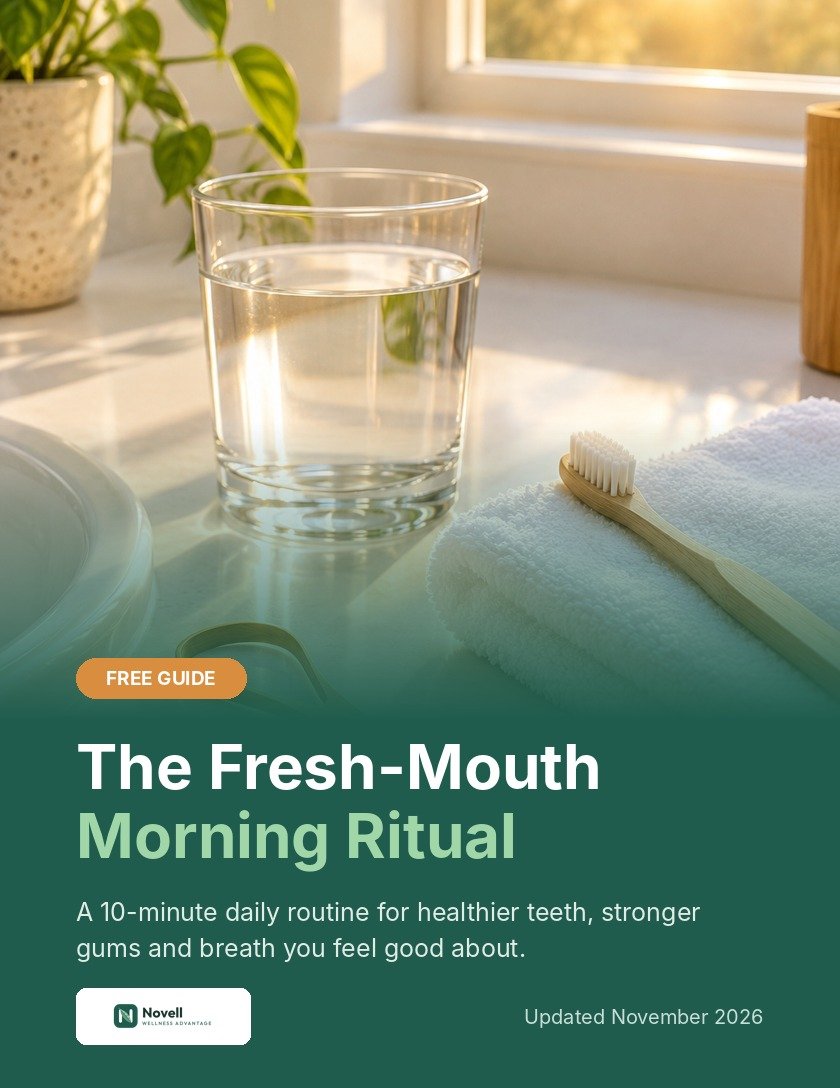
Free guide
The Fresh-Mouth Morning Ritual: A 10-Minute Daily Routine for Healthier Teeth, Stronger Gums, and Breath You Feel Good About
Download our free 10-minute morning ritual guide and build a simple daily routine that supports your teeth, gums, and breath — no expensive products required. Enter your first name and email and you’ll get it right away.
You’ll get the guide right away, plus a few short tips by email. Unsubscribe any time. Privacy Policy
1. How long is ‘too long’ for mild swelling to last?
You will find confident timelines on many websites — ‘three to five days’ is common — but those numbers are rarely tied to published clinical evidence. The truth is that how quickly gum puffiness settles depends on factors that vary enormously from person to person: how deeply the tooth is positioned, whether the flap is large or small, how well you can keep the area clean, and your individual health picture. No well-established guideline exists that applies to everyone. If your swelling has not improved within a few days of careful cleaning and rinsing, that is a reasonable signal to call a dentist — not because a study says so, but because continuing to wait without professional input carries real risk.
2. Do salt-water rinses actually resolve the problem, or just ease symptoms temporarily?
Salt-water rinsing is recommended by virtually every dental resource online. Rinsing gently can help dislodge debris and may soothe an irritated area. What the evidence is much less clear about is whether rinsing changes the underlying cause in any meaningful way when a tooth is impacted or when the gum flap keeps returning. Many people rinse conscientiously for weeks and find the swelling comes back every time they miss a session — because the structural problem has not changed. Home care has real limits that articles rarely spell out clearly.
3. What about people who are pregnant, managing a chronic health condition, or unable to take common over-the-counter pain medicines?
Most online guidance is written for a general adult with no complicating factors. If you are pregnant, have a condition that affects how your body responds to infection, or cannot take certain medications, the standard advice may not apply to you at all. Research on managing wisdom-tooth gum swelling in these specific groups is thin. This is exactly the conversation to have with a healthcare provider — not something to manage on the basis of a general article.
4. Can swelling occur even after a wisdom tooth is fully erupted?
Most content focuses on partially erupted teeth and the gum flap they create. But gum puffiness around a fully erupted wisdom tooth does happen, and the causes can be different — including gum health concerns that have nothing to do with the eruption process itself. The research does not give us a clean decision tree here, and the answer ‘it depends’ is frustratingly accurate.
5. Is swelling on only one side meaningful?
One-sided swelling is extremely common, simply because wisdom teeth rarely erupt at the same time on both sides. But almost no guidance helps readers think through whether the one-sided nature of their swelling is relevant to what is causing it. The honest answer is that the side alone does not tell you much — the full picture of symptoms does.
The Warning Signs That Go Beyond ‘Wait and See’
While research leaves a lot of grey areas around mild, recurring discomfort, there are situations where the answer is clearer: get professional attention promptly.
Seek dental or medical care without delay if you notice:
- Swelling that is spreading to your jaw, cheek, or neck
- Difficulty opening your mouth or swallowing
- A fever or general feeling of being unwell
- Visible pus or a foul taste that does not clear
- Swelling that gets noticeably worse over 24 to 48 hours
These are not signs to manage at home with rinsing. They indicate that bacteria may be spreading beyond the local area, and that situation can escalate quickly. This is an area where the evidence is consistent: prompt care matters.
What You Can Reasonably Do at Home — With Realistic Expectations
Until you are able to see a dentist, gentle home care can help keep the area as comfortable as possible. Here is what is reasonable — and what the limits are:
- Rinse gently with warm salt water. This can help dislodge food and soothe the area. Do not rinse so vigorously that you irritate already-tender tissue.
- Brush carefully around the area. Skipping the area entirely because it is tender allows more debris to accumulate, which typically makes things worse. Use a soft-bristled brush and work slowly.
- Use a cold pack on the outside of your cheek. This can temporarily ease discomfort. Do not apply ice directly to the gum.
- Avoid tobacco and alcohol. Both can irritate gum tissue and slow recovery.
- Do not attempt to puncture, pop, or cut the swollen tissue yourself. This creates a real risk of making the situation worse and introducing more bacteria.
Here is the honest limitation of all of this: home care manages symptoms. It does not remove an impacted tooth, eliminate a recurring gum flap, or resolve an established infection. If the same tooth keeps causing the same problem, that pattern itself is information — and it is information a dentist needs to evaluate.
The Broader Question: What Are You Actually Doing for Your Mouth’s Long-Term Health?
Wisdom tooth discomfort tends to get most of the attention, but it is worth stepping back and asking a bigger question: what is the overall environment in your mouth doing to your gum health?
Research into the oral microbiome — the community of bacteria living in the mouth — has gained significant attention in recent years. A published study in Springer Nature found that people with healthy teeth tend to have a higher population of beneficial bacteria in the mouth. The working idea is that the balance of bacterial populations in your mouth may play a larger role in gum comfort and tooth health than most of us were taught to expect.
What remains genuinely unclear in the science is exactly how to shift that balance in a lasting way, how much influence diet, habits, and supplementation each have individually, and how long any changes take to become meaningful. The research is promising but not complete.
One area of growing interest is probiotic support for oral health — not as a replacement for brushing, cleaning, or professional dental care, but as a way to support the bacterial environment in the mouth. ProDentim is a chewable probiotic supplement that contains 3.5 billion probiotic strains, including Lactobacillus Paracasei, B.lactis BL-04, and Lactobacillus Reuteri, alongside a proprietary blend of Inulin, Malic Acid from strawberries, Tricalcium Phosphate, and Peppermint. The vendor describes it as designed to support gum health and a balanced oral bacterial environment. It is not a dental treatment and is not a substitute for professional care.
If this area interests you, you can read more about ProDentim on the product page linked below.
A Practical Summary
If your gum is swollen around a wisdom tooth, here is a realistic picture of where things stand:
- The basic mechanism is well understood. A gum flap over a partially erupted tooth traps debris and allows bacteria to multiply.
- How long swelling should last before you act, and whether home care alone is sufficient, depends on your individual situation in ways no general article can fully answer.
- Mild, improving discomfort with careful home care is a different situation from spreading swelling, fever, or worsening pain — the latter requires prompt professional attention.
- Recurring episodes involving the same tooth are a signal to have a dentist assess whether the tooth itself needs to be addressed.
- The science on supporting overall mouth health through the oral microbiome is developing, and honest researchers will tell you that our understanding is still growing.
Trust what the evidence actually supports. Be appropriately skeptical of confident timelines and guaranteed outcomes — from any source, including this one.
Curious about supporting your mouth’s bacterial environment alongside your regular dental care? The ProDentim product page at Novell Wellness Advantage walks through what the supplement contains, how it is formulated, and what the 60-day money-back guarantee covers. Take a look and decide whether it fits what you are already doing for your oral health.
Visit the ProDentim product page here:
Disclosure: This article contains affiliate links. If you purchase through them, we may earn a commission at no additional cost to you.
Medical Disclaimer. The content on this site is for informational purposes only and is not medical advice. It is not a substitute for professional diagnosis or treatment. Always consult a qualified healthcare provider before starting any supplement, especially if you have a medical condition or take medication.
FDA Structure-Function Statement. These statements have not been evaluated by the Food and Drug Administration. This product is not intended to diagnose, treat, cure, or prevent any disease.