
Teeth Swollen Face: What to Ask at Your Next Dental Visit
Heads up: this article contains affiliate links. If you buy through them, we may earn a commission at no extra cost to you.
If you have noticed teeth swollen face puffiness — a cheek that feels tender, a jaw that looks fuller on one side, or pressure around a tooth that seems to be pushing outward — you already know that uneasy feeling in your stomach. Something is off, and you are not sure how serious it is.
This article is not going to make you more anxious. It is going to do something more useful: give you the exact questions to bring to your dentist or doctor, explain what to listen for in the answers, and help you leave the appointment actually knowing something instead of nodding along and forgetting half of it before you reach the parking lot.
But first, one thing needs to be said clearly.
When Swelling Around a Tooth Is an Emergency — Not a Dentist Appointment
Before any appointment planning, please read this section carefully.
Some forms of facial swelling from a tooth-related problem can become medically serious very quickly. Go to an emergency department — not an urgent care clinic, not a dental office — if you experience any of the following:
- Swelling that is spreading toward your eye, under your chin, or down your neck
- Difficulty breathing or swallowing
- Fever with the swelling
- Inability to open your mouth more than a small amount
- Feeling confused, very unwell, or rapidly worsening
These are not signs to ‘wait and see.’ If any of them apply right now, please stop reading and seek emergency care.
If your swelling is localised — a puffy cheek, tenderness near one tooth, some gum redness — and none of the above apply, then a same-day or next-day urgent dental appointment is the right starting point. Most dental practices keep slots open for exactly this.
How to Make the Most of a Short Dental Visit When Your Face Is Swollen
Dental appointments feel rushed. The dentist steps in, looks at X-rays, tells you something in clinical language, and suddenly you are being handed a treatment plan you did not fully understand. Here is how to change that dynamic.
Before You Go: Write Down Three Things
The most useful thing you can do before any dental visit is spend five minutes writing:
1. When the swelling started and whether it is getting worse, staying the same, or coming and going
2. Any other symptoms — a bad taste in your mouth, tooth sensitivity to temperature, pain when biting, or visible redness
3. Any recent dental work, a tooth that has been bothering you, or a filling or crown that feels different
When you hand that to the receptionist or dentist at the start of the visit, it immediately signals that you are an organised, engaged patient. Dentists give more thorough explanations to patients who clearly want them.
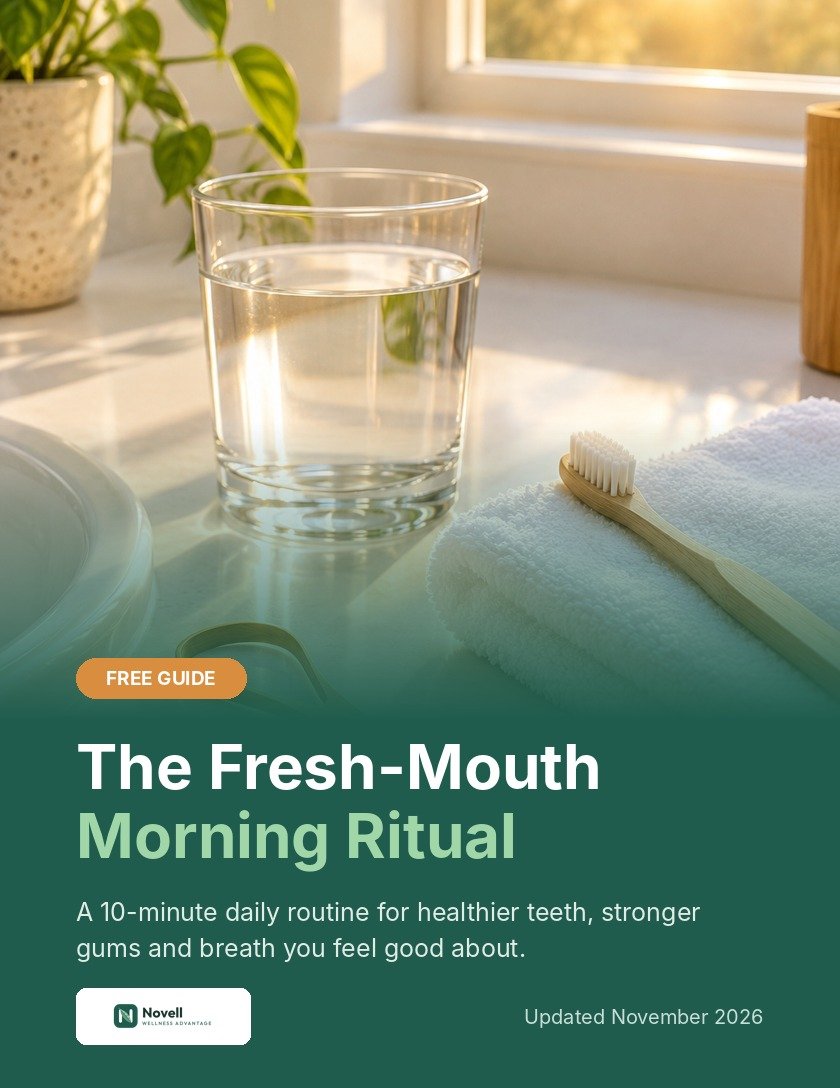
Free guide
The Fresh-Mouth Morning Ritual: A 10-Minute Daily Routine for Healthier Teeth, Stronger Gums, and Breath You Feel Good About
Download our free 10-minute morning ritual guide and build a simple daily routine that supports your teeth, gums, and breath — no expensive products required. Enter your first name and email and you’ll get it right away.
You’ll get the guide right away, plus a few short tips by email. Unsubscribe any time. Privacy Policy
The Questions to Ask — and What a Useful Answer Sounds Like
Here are the specific questions worth raising, along with what you should actually listen for in the response.
‘What is causing this swelling?’
This sounds obvious, but many patients leave without a clear answer. Push gently if the answer is vague. A useful answer names a specific cause — a particular tooth, a specific area of gum tissue, or a structural issue. If the dentist says ‘it could be a few things,’ ask what the most likely one is and why.
What you do not want to hear: only a treatment recommendation with no explanation of what triggered the swelling.
‘Has this stayed in one place, or has it spread beyond the tooth?’
This question helps you understand how localised the problem is. You want the dentist to assess not just the obvious area but also the surrounding tissue, jaw, and nearby lymph nodes. If you feel any tenderness under your jaw or in your neck, say so specifically — do not assume they already know.
‘Could this have been building up quietly before I noticed it?’
This is one of the most important questions, and almost no one thinks to ask it. Dental problems beneath the surface — including deep gum issues or problems at the root of a tooth — can develop for months before any outward sign appears. Pain may be mild or even absent while something more significant is happening underneath.
A good answer will acknowledge this honestly and tell you whether imaging (like an X-ray) shows anything that was not visible or obvious on the surface.
‘What happens if I do not treat this right now?’
You deserve a straight answer to this. Ask it plainly. The dentist should be able to tell you the realistic outcome of delaying — not just a vague ‘it could get worse.’ Ask specifically: worse in what way, and how quickly? That helps you weigh the decision with your actual schedule and budget in mind.
‘What are my options, and what is the difference between them?’
Many patients assume there is only one option. There often is not. Ask whether there is more than one way to address the problem, and what the trade-offs are between them — in terms of cost, recovery, and likelihood of the problem returning. Write down what you hear.
‘Is there anything I am doing day-to-day that may be making this worse?’
This question opens the door to a conversation about daily habits — not just brushing and flossing technique, but the overall environment in your mouth. This is where things get interesting for anyone who has been reading about the oral microbiome (the community of bacteria that live in the mouth).
If your dentist mentions the balance of bacteria in the mouth, the health of your gum tissue, or the role of your daily routine in maintaining that balance, you are having a useful conversation. Take notes.
What to Say If the Appointment Is Very Short
Some appointments are just eight to ten minutes. If yours is, prioritise like this:
- Lead with your written symptom summary (this saves time)
- Ask the cause question first
- Ask the ‘what if I wait’ question second
- Request a follow-up call or a longer appointment specifically to discuss prevention and daily habits
You are not being demanding. You are being a responsible patient. Any good dental professional will respect it.
What the Visit Probably Will Not Cover — And Why That Matters
Here is what most short dental visits leave out entirely: the day-to-day environment your mouth lives in.
The dentist will treat the immediate problem. What they typically do not have time to discuss is what you can do at home — between visits and after treatment — to support the health of your gum tissue and the bacterial balance in your mouth.
This is not a criticism of dental professionals. It is simply a reality of how appointments are structured. The conversation about long-term oral environment is one you often have to initiate yourself.
Some women are choosing to support their daily oral care routine with a probiotic-based supplement specifically formulated for mouth health. This is worth raising at the end of your appointment — not as a replacement for any treatment your dentist recommends, but as something to ask about alongside your usual routine.
One option some people in the natural health community have been exploring is ProDentim, a chewable probiotic supplement that contains a blend of probiotic strains and nutrients. According to the manufacturer, it includes Lactobacillus Paracasei, B.lactis BL-04, and Lactobacillus Reuteri, along with a proprietary blend that includes inulin, malic acid from strawberries, tricalcium phosphate, and peppermint. The manufacturer states that these ingredients are intended to support the bacterial balance in the mouth and the general health of gums and teeth.
It is not a treatment for any dental condition, and it does not replace professional care. But if your appointment conversation leads you toward thinking about what you can do at home to support a healthier oral environment, it may be worth learning more about.
A Final Note on Swelling You Have Been Ignoring
If teeth or face swelling has been something you have been quietly living with — telling yourself it will pass, avoiding the dentist because of cost or anxiety or both — please take that first step of making the call.
Not because you need to be alarmed. But because catching something early almost always means a simpler, less expensive path forward than waiting until it demands your attention.
You do not have to walk in without a plan. Now you have one.
If your appointment conversation has you thinking about what you can do at home to support your gum and teeth health between visits, take a look at our ProDentim product page for a full overview of how it works, what it contains, and what the manufacturer offers.
Visit the ProDentim product page here:
Disclosure: This article contains affiliate links. If you purchase through them, we may earn a commission at no additional cost to you.
Medical Disclaimer. The content on this site is for informational purposes only and is not medical advice. It is not a substitute for professional diagnosis or treatment. Always consult a qualified healthcare provider before starting any supplement, especially if you have a medical condition or take medication.
FDA Structure-Function Statement. These statements have not been evaluated by the Food and Drug Administration. This product is not intended to diagnose, treat, cure, or prevent any disease.