
Gum Swollen Around Teeth? A Daily Routine That Helps
Heads up: this article contains affiliate links. If you buy through them, we may earn a commission at no extra cost to you.
If you have noticed that the gum swollen around teeth looks puffy, tender or darker than usual, you are far from alone. Many women in their forties, fifties and sixties find that their gums become more reactive over time, even when they feel like they are already doing everything right.
Before we get into the routine, a quick but important point: persistent puffiness, a bad taste in your mouth, a tooth that feels loose, or any facial tenderness are reasons to contact a dentist promptly. The daily habits below are supportive steps for general gum health — they are not a substitute for professional care when something urgent is happening.
With that said, here is a realistic day-by-day framework for someone who wants to be more intentional about what is happening in their mouth.
Morning: Start Before You Eat
The first fifteen minutes of your morning matter more for your gums than almost any other window in the day.
Hydrate first. Before coffee, drink a full glass of water. Saliva is your mouth’s natural defence, and overnight your mouth dries out. Rinsing with plain water as soon as you wake up helps shift the bacterial load that has built up.
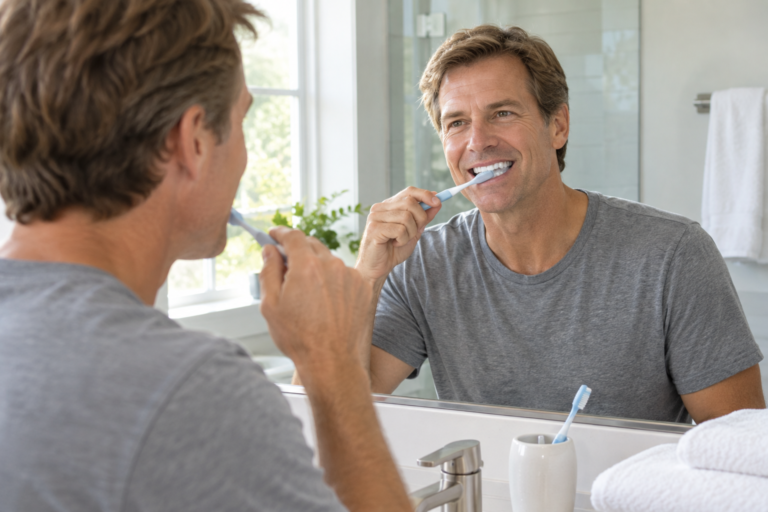
Gentle, methodical brushing. Use a soft-bristled brush and take two full minutes. Angle the bristles slightly toward the gum line and use short circular strokes rather than scrubbing horizontally. Horizontal scrubbing can push gum tissue back over time. If your gums are already tender, firm pressure is the last thing they need.
Floss before you brush, not after. Flossing first loosens debris and disrupts the soft plaque sitting just below the gum line. Brushing second sweeps it away. Most people do it the other way around, which means loosened material stays in the mouth.
Tongue cleaning. A simple metal or silicone tongue scraper takes thirty seconds and removes a significant source of the bacteria that contribute to gum irritation and breath issues. Worth adding if you have not already.
Breakfast: What You Eat Changes What Lives in Your Mouth
Your gums are living tissue fed by your bloodstream, so what you eat for breakfast genuinely matters.
Focus on whole foods that are low in added sugar. Refined sugar feeds the bacteria that produce acids at the gum line. A breakfast built around eggs, whole-grain toast, berries or plain yoghurt gives you nutrients without the sugar hit.
Crunchy raw vegetables — if you include them at any meal — act like a mild mechanical scrub along the gum line. Celery, carrots and cucumber are practical examples.
Vitamin C-rich foods are worth prioritising throughout the day. Citrus, capsicum, kiwi and broccoli are good sources. Gum tissue relies on collagen, and your body cannot make collagen without adequate vitamin C.
Drink water with breakfast rather than juice. Even natural fruit juice bathes the gums in fruit sugars for an extended period when sipped slowly.
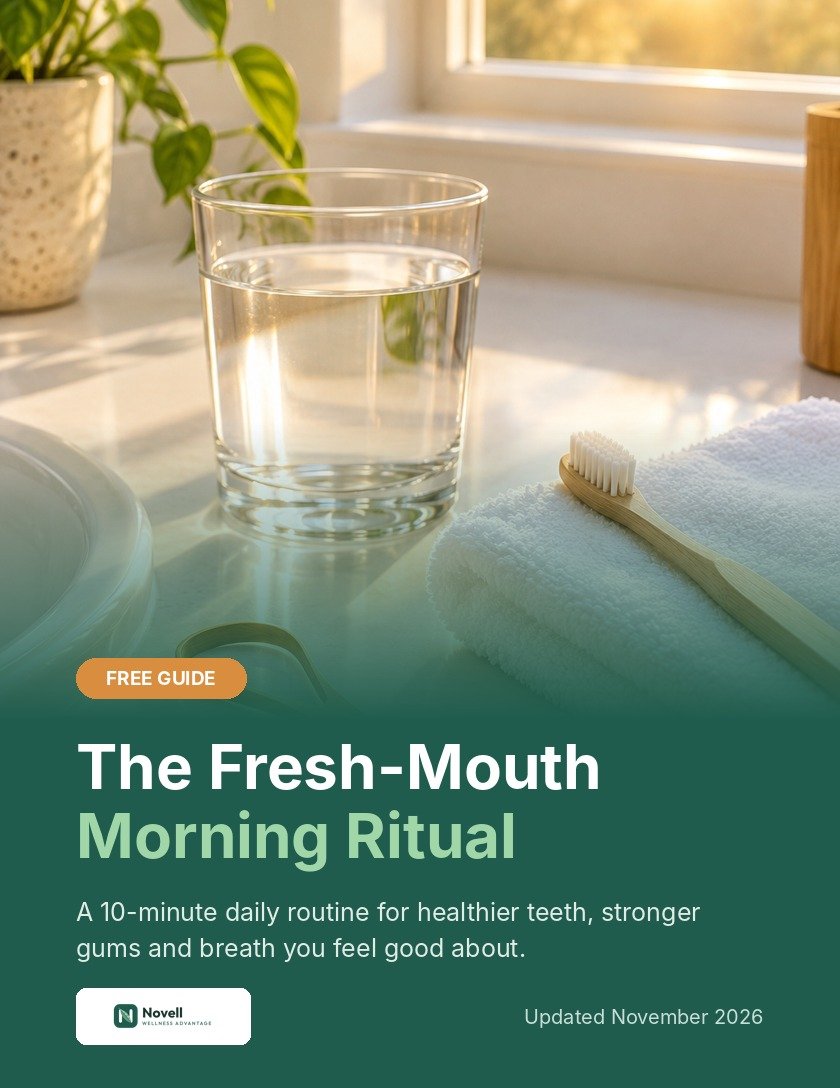
Free guide
The Fresh-Mouth Morning Ritual: A 10-Minute Daily Routine for Healthier Teeth, Stronger Gums, and Breath You Feel Good About
Download our free 10-minute morning ritual guide and build a simple daily routine that supports your teeth, gums, and breath — no expensive products required. Enter your first name and email and you’ll get it right away.
You’ll get the guide right away, plus a few short tips by email. Unsubscribe any time. Privacy Policy
Mid-Morning: Movement and Circulation
This might seem unrelated, but circulation affects every tissue in your body, including your gums. A twenty to thirty-minute walk, a gentle yoga session, or a bike ride gets blood moving to the fine capillaries that feed gum tissue.
If your schedule is tight, even ten minutes of brisk movement is worth something. The goal is consistency over intensity.
After exercise, rinse your mouth with water. Breathe through your nose where possible during moderate activity — mouth breathing dries out oral tissue, which is not ideal for gums that are already reactive.
Lunch: The Forgotten Oral-Care Window
Most people brush once or twice a day and forget that the hours between meals also matter.
After lunch, rinse with water thoroughly. If you are at home, a quick brush is even better. If you are out, swishing water vigorously for thirty seconds dislodges food particles from around the gum line.
Avoid sticky or sugary snacks between meals. Dried fruit, crackers, and anything that clings to teeth and sits along the gum line gives bacteria more to work with for longer.
Foods to keep in your weekly rotation for gum-supportive nutrition: leafy greens (folate), dairy or fortified alternatives (calcium), and oily fish (omega-3 fatty acids, which are associated with gum tissue health in general dietary research).
Afternoon: The Habit Most People Skip
If you notice that your gums are swollen around teeth in a specific spot — one tooth rather than all of them — check for trapped food. A single piece of popcorn hull, a seed, or a fragment of food lodged just under the gum line can cause localised puffiness that looks alarming. Gentle flossing to clear it, followed by a water rinse, is often enough to let that spot settle within a day or two.
If the puffiness around one tooth persists for more than a few days even after cleaning the area carefully, that is a signal to have a dentist take a look. Localised swelling that does not respond to improved hygiene may have a cause underneath the gum that is not visible from the outside.
Afternoon is also a good time to check in with your hydration. Aim for six to eight glasses of water across the day. A well-hydrated mouth produces more saliva, which is your body’s built-in tool for neutralising acids and keeping gum tissue moist.
Evening: The Most Important Oral Care Session of the Day
Your last oral hygiene session before bed is the one that matters most. Whatever you leave in your mouth overnight has six to eight hours to interact with gum tissue without the benefit of eating, drinking or talking to dilute it.
Floss again. Yes, again. Even if you did it in the morning.
Brush thoroughly using the same soft, angled technique from the morning.
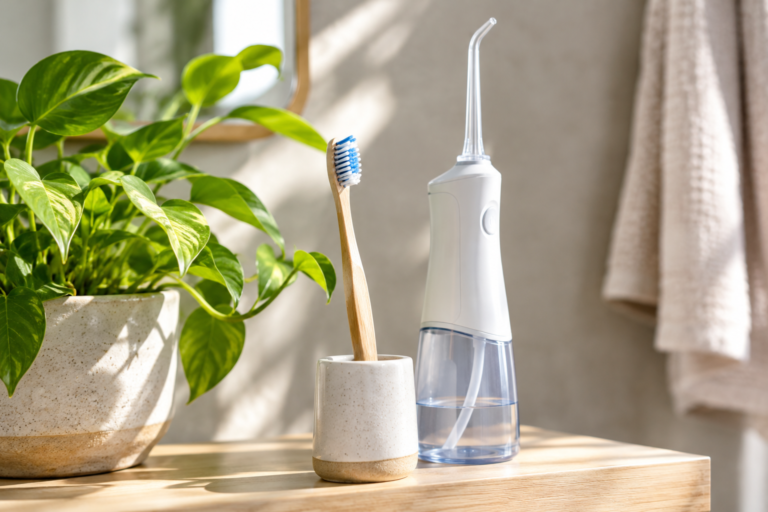
Consider a water flosser or interdental brushes if standard floss is difficult to use around bridges, implants or crowded teeth. These tools are especially useful for getting into spots that string floss misses.
One daily probiotic tablet. This is where ProDentim fits into the routine. It is a chewable probiotic tablet — not a replacement for brushing or flossing, but an addition to them. Each tablet contains 3.5 billion probiotic strains, including Lactobacillus Paracasei, B.lactis BL-04® and Lactobacillus Reuteri, along with a proprietary blend that includes inulin, malic acid from strawberries, tricalcium phosphate and peppermint. The idea, according to the manufacturer, is to support the balance of bacteria in the mouth and provide a healthy environment for good bacteria to thrive. You chew it slowly, which is different from swallowing a capsule — contact with oral tissue is part of how it is designed to work. It is non-GMO, stimulant-free, gluten-free and non-habit-forming. One tablet a day, chewed slowly as part of your evening wind-down, is how it fits into this kind of routine.
End with plain water, not a rinse if you are trying to preserve oral bacteria. Conventional mouthwashes contain compounds that may disrupt the oral microbiome you are trying to support. Plain water after your evening brush is a reasonable finishing step.
Gum Swollen Around Teeth: When to Stop Self-Managing and Call a Dentist
Some situations need professional attention, full stop. Here is a plain-language guide:
Call promptly if you notice: a bad or foul taste that does not clear up, a visible bump or blister on the gum, a tooth that has become loose or painful to bite on, facial swelling, a fever, or swelling that has been getting progressively worse over several days.
Monitor for a short time if: you have mild general puffiness that appeared after changing your oral care routine, or a localised tender spot that you can link to trapped food and that is already improving after clearing the area.
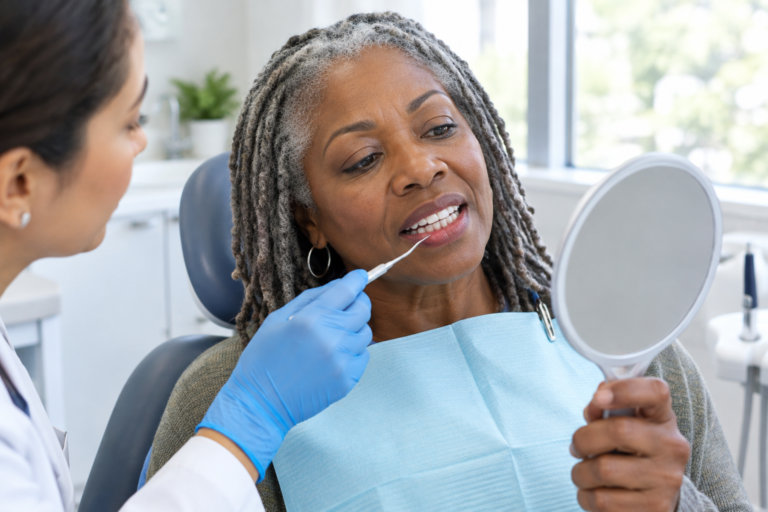
Book a routine appointment if: you have consistent bleeding when you brush, gums that look puffy more days than not, or gums that seem to be pulling away from your teeth. These are worth discussing with a dentist even when they are not acutely painful.
No home routine — however thoughtful — addresses what is happening beneath the gum line if there is a structural problem there. The habits above are about making your daily environment as supportive as possible for your gum tissue. They work best as prevention and maintenance, not as treatment for a condition that is already established.
A Week in Summary
To make this feel manageable rather than overwhelming, here is the stripped-down version:
- Morning: water first, floss, brush gently, scrape tongue
- Breakfast and meals: whole foods, water over juice, vitamin C daily
- Mid-morning: twenty to thirty minutes of movement
- After lunch: rinse or brush
- Afternoon: check for trapped food around any tender spots, stay hydrated
- Evening: floss, brush, ProDentim tablet (chewed slowly), plain water
- Weekly: one dental check-in with yourself in a mirror — look for anything that is changing
None of these steps is dramatic on its own. Together, done consistently, they give your gums the best possible daily environment to stay healthy and comfortable.
If you are curious about where ProDentim fits into a routine like this, you can read more about the product and how it works on our dedicated product page.
Visit the ProDentim product page here:
Disclosure: This article contains affiliate links. If you purchase through them, we may earn a commission at no additional cost to you.
Medical Disclaimer. The content on this site is for informational purposes only and is not medical advice. It is not a substitute for professional diagnosis or treatment. Always consult a qualified healthcare provider before starting any supplement, especially if you have a medical condition or take medication.
FDA Structure-Function Statement. These statements have not been evaluated by the Food and Drug Administration. This product is not intended to diagnose, treat, cure, or prevent any disease.