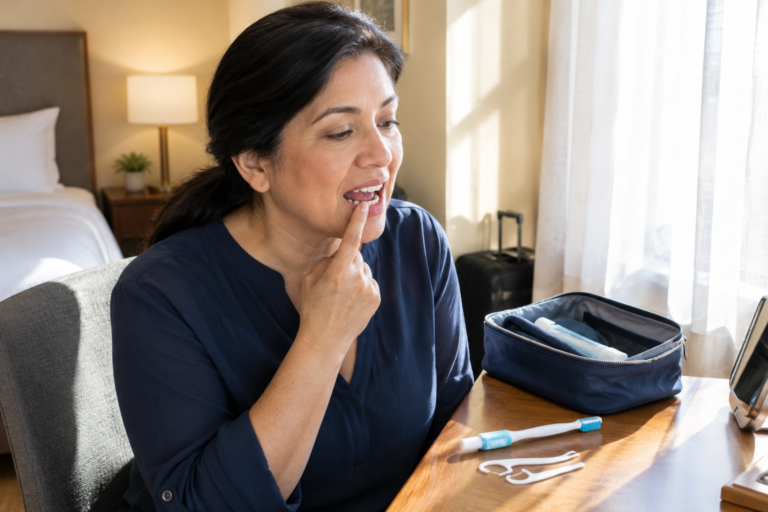
Recession Gum: What Actually Improves First (And When)
Heads up: this article contains affiliate links. If you buy through them, we may earn a commission at no extra cost to you.
If you have been noticing that your teeth look longer than they used to, or that certain spots feel tender when you eat or drink something cold, recession gum — the gradual pulling back of gum tissue from the tooth surface — is likely on your radar. And if you have started taking steps to address it, the first question you probably have is: how long before I notice anything different?
The honest answer is that it depends — on how far things have progressed, what is driving the recession in your particular case, and how consistently you apply the habits that support gum health going forward. This article walks through what tends to change first, what takes longer, and why some people notice very little for a while. Managing expectations here matters, because unrealistic ones lead people to give up too soon or, just as importantly, to assume they are fine when they should still be paying attention.
What Is Actually Happening When Gums Recede
Gum tissue that has already pulled back does not regenerate on its own. That is one of the most important things to understand, and it is something that many general articles gloss over. The goal of home care and supportive habits is not to regrow what is gone — that is a conversation for your dentist or periodontist — but to stop further loss and to create an environment in the mouth that supports the remaining tissue.
This distinction matters enormously when you are trying to gauge progress. If you are expecting to see your gumline visibly move back toward the crown of the tooth, you will not, and that is not a sign that nothing is working. What you are looking for are softer, more reliable signals.
Week 1 to 2: The Earliest Changes Are Often About Comfort, Not Appearance
For most people, the first noticeable shift — if it comes — is a reduction in day-to-day sensitivity or tenderness. Exposed tooth roots are more reactive to temperature and pressure than enamel-covered surfaces, and when the oral environment becomes less irritated overall, that reactivity can begin to ease.
This is not universal. Some people notice nothing in the first two weeks, particularly if the recession is longstanding or if they are still in the process of identifying and changing the habits that may be contributing to it. That is completely normal and does not mean nothing is happening at a microscopic level.
One of the most important things to address early is brushing technique. Guidance from the Cleveland Clinic notes that brushing too hard can contribute to gum recession — so if aggressive brushing has played a role for you, shifting to a softer motion with a soft-bristled brush is one of the earliest adjustments that can reduce ongoing mechanical irritation. This change alone will not reverse what has already happened, but it removes a potential ongoing cause.
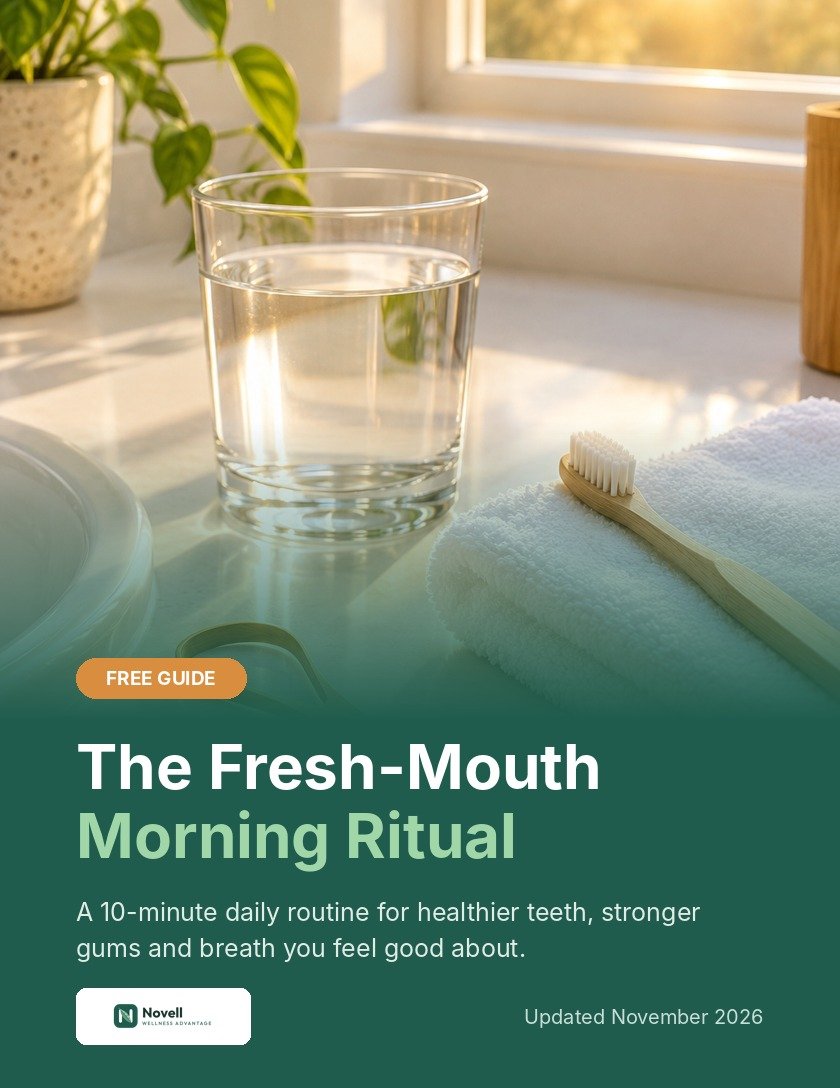
Free guide
The Fresh-Mouth Morning Ritual: A 10-Minute Daily Routine for Healthier Teeth, Stronger Gums, and Breath You Feel Good About
Download our free 10-minute morning ritual guide and build a simple daily routine that supports your teeth, gums, and breath — no expensive products required. Enter your first name and email and you’ll get it right away.
You’ll get the guide right away, plus a few short tips by email. Unsubscribe any time. Privacy Policy
Week 3 to 6: Consistency Becomes the Real Test
By the three-to-six week mark, the people who tend to see the most meaningful early progress are those who have made consistent changes to their daily routine — not just one or two days here and there.
What might be noticeable during this window:
Reduced puffiness or tenderness along the gumline. When the tissue that remains is less irritated on a daily basis, it often looks and feels calmer. This is not the same as new tissue growing — it is existing tissue responding to a less hostile environment.
Fresher breath more consistently. This is one of the first changes people report noticing, and it often reflects an improvement in the bacterial balance in the mouth. When the ecosystem in the mouth shifts toward more supportive conditions, the byproducts that cause odour tend to decrease.
Less bleeding with gentle brushing or flossing. Gum tissue that has been irritated or poorly supported tends to bleed more easily. As the environment stabilises, this often decreases — though it does not disappear overnight, and in some cases takes longer than six weeks.
It is worth noting: if you are still seeing significant bleeding, tenderness or any new areas of recession after six weeks, that is a signal to get in front of a dental professional. These habits support the oral environment, but they do not replace clinical evaluation.
Month 2 and Beyond: Where Realistic Expectations Live
By the two-month mark, people fall into roughly three groups.
The first group has noticed tangible improvements in comfort, breath freshness and gum appearance, and their dental professional at a check-up confirms that things look stable or improved. These are the people whose experience tends to match what optimistic timelines describe.
The second group has noticed modest or inconsistent changes — better some days, less noticeable on others. This is probably the most common experience, and it reflects the reality that oral health is shaped by many factors simultaneously: hydration, nutrition, what medications someone may be taking, stress, tooth alignment, nighttime grinding, and more. Progress in this group tends to be real but quieter.
The third group notices very little, or finds that tenderness or other concerns are continuing. For these individuals, the most important step is a conversation with a dentist or periodontist to determine whether something structural or clinical requires professional attention. Home habits matter, but they have limits — and gum recession that continues despite consistent care needs a clinical explanation.
The Role of the Oral Microbiome in This Picture
One area of growing interest in oral health research is the bacterial ecosystem in the mouth — specifically, the balance between bacteria that support healthy tissue and those that may contribute to irritation and breakdown. Research cited by some oral health formulations has pointed to the idea that an imbalanced oral environment can make existing gum concerns harder to manage.
This is relevant context when thinking about why two people with similar brushing habits can have very different outcomes. The bacterial environment in the mouth is not something that manual hygiene alone fully controls, which is part of why interest in probiotic-based approaches to oral support has grown in recent years.
According to the vendor, ProDentim is a dissolvable probiotic supplement formulated with 3.5 billion probiotic bacteria (the vendor’s figure) and a blend of additional nutrients. The vendor states that the strains included — Lactobacillus Paracasei, B.lactis BL-04®, and Lactobacillus Reuteri — were selected with gum and tooth health in mind, along with a proprietary blend that includes inulin, malic acid from strawberries, tricalcium phosphate, and peppermint. The product is non-GMO, stimulant-free, gluten-free and described as non-habit forming.
It is not a treatment for recession. It is not a replacement for professional dental care. But for someone who is building a daily oral health routine and wants to support the bacterial environment in the mouth as part of that — alongside gentle brushing, hydration and regular dental visits — it is worth understanding what it is designed to do.
What to Actually Watch For Week by Week
Rather than looking in the mirror every morning searching for visible gum growth (which will not be there), here is a more useful framework for tracking progress:
Days 1 to 14: Notice changes in sensitivity, comfort and tenderness during meals and brushing. These are often the first to respond when the oral environment begins to shift.
Weeks 3 to 6: Pay attention to breath freshness, bleeding frequency, and how the gumline looks and feels after brushing. Calmer, less reactive tissue is a meaningful sign.
Months 2 to 3: Compare notes at your next dental check-up. Ask your dentist whether recession sites appear stable, improved, or whether further progression has occurred. That clinical measurement is the most reliable data point you have.
Ongoing: Consistency over months matters more than intensity over days. The oral environment responds slowly and incrementally. People who stick with supportive habits for the long term may see more reliable results over time — but some people, despite doing everything right, will still need professional intervention. That is not failure. It is just anatomy.
A Few Things Worth Knowing Before You Start
If you are considering adding a probiotic supplement to your oral health routine, a few practical points:
ProDentim comes with a 60-day money-back guarantee, which allows time to assess whether you notice any personal benefit before fully committing. According to the vendor, it is manufactured in an FDA-registered facility and tested for purity. The recommended use is to slowly chew one tablet each morning.
If you are currently taking any prescription medication, the company recommends showing the product to your doctor before beginning — which is sensible advice for any supplement, particularly for those managing other health conditions.
The six-bottle package includes free shipping and three bonus guides focused on fresh breath and teeth appearance — which may be a practical choice if you are planning to give the product a full two-to-three month trial.
None of this replaces a conversation with your dentist about the specifics of your gum health. But if you are building the kind of daily routine that takes oral health seriously — and you are thinking about what else might support the environment in your mouth alongside good hygiene habits — this is worth reading more about.
If you are exploring a probiotic approach to supporting your oral health alongside your daily routine, you can read more about ProDentim — including its full ingredient list, usage guidance and guarantee details — on our product page.
Visit the ProDentim product page here:
Disclosure: This article contains affiliate links. If you purchase through them, we may earn a commission at no additional cost to you.
Medical Disclaimer. The content on this site is for informational purposes only and is not medical advice. It is not a substitute for professional diagnosis or treatment. Always consult a qualified healthcare provider before starting any supplement, especially if you have a medical condition or take medication.
FDA Structure-Function Statement. These statements have not been evaluated by the Food and Drug Administration. This product is not intended to diagnose, treat, cure, or prevent any disease.