How to Stop Receding Gums: The Questions Nobody Asks
If you want to know how to stop receding gums but feel a little embarrassed about the specifics — whether you waited too long, whether your habits caused it, whether your dentist is silently judging you — you are not alone. These are the questions most people type into a search box at midnight rather than say out loud in a dental chair. This article answers them plainly and without judgement.
‘Am I the only one my age dealing with this?’
Absolutely not. Gum recession becomes noticeably more common as we move through our fifties, sixties, and seventies. It is not a sign that you have been neglectful or careless. Tissue changes over decades, and factors like genetics, hormonal shifts, and even the simple passage of time all play a role. If you have noticed your gum line creeping upward and your teeth looking longer than they did ten years ago, that observation is accurate — and shared by a very large number of women in the same age group.
‘Did I do this to myself by brushing too hard?’
Possibly in part — but the honest answer is: it is usually not one single cause. Vigorous brushing with a firm-bristled brush over many years can contribute to gum recession, but so can other factors entirely outside your control. Genetics, the natural position of your teeth in the jaw, and changes in gum tissue over time are all real contributors. So please stop beating yourself up. If you have been brushing enthusiastically because you care about your teeth, that motivation is good — only the technique may need adjusting.
What you can do starting today: switch to a soft-bristled brush, use gentle circular motions rather than a back-and-forth scrub, and ease the pressure. This will not regrow what has receded, but it can meaningfully slow further change.
‘Can receding gums actually grow back on their own?’
This is probably the most searched question on this topic, and the honest answer is: no, not on their own. Gum tissue that has already receded does not regenerate by itself the way, say, a skin scrape heals. This is not cause for despair — it is simply important to understand so you do not spend months waiting for a reversal that home care alone cannot produce.
What ‘stopping’ recession actually means in practice is:
– Slowing or halting further recession by addressing its underlying causes
– Reducing tenderness and sensitivity in exposed areas
– Surgically covering exposed root surfaces in more significant cases (a conversation for your dentist or periodontist)
The goal most people can realistically work toward at home is stabilisation — preventing it from getting worse — while professional care handles the rest.
‘Is there a point where I waited too long?’
This worry keeps a lot of women from calling the dentist at all, which is exactly the wrong response. There is almost never a point at which nothing helpful can be done. Earlier attention does tend to give more options, but even well-established recession has pathways for management and treatment. The question to ask is not ‘did I wait too long?’ but ‘what can be done from here?’
If you are noticing any of the following, contact a dental professional sooner rather than later:
– Bleeding that occurs regularly and does not resolve
– Teeth that feel loose or have shifted position
– Visible pus, significant swelling or persistent bad taste
– Rapid visible change in gum position over weeks
Those are signals to move quickly. Normal, slow recession noticed at a check-up is a very different situation and can usually be addressed with far less urgency.
‘How do I stop receding gums from getting worse — and how do I know what is actually causing mine?’
This is exactly the right question, and the reason it matters is this: how to stop your gums receding depends entirely on what is driving it in your particular mouth. Recession caused by plaque buildup calls for one approach. Recession caused by clenching or grinding teeth at night calls for something else entirely. Recession linked to misaligned teeth may need orthodontic input. These are not interchangeable.
A dentist can usually determine the likely cause through examination and review of your history. Understanding your specific cause means you are not treating the wrong thing — which is exactly why professional evaluation is worth the visit, not a replacement for it.
‘My dentist keeps recommending expensive procedures. Are there things I can do at home that actually matter?’
Yes, and they are worth taking seriously — with realistic expectations about what they can and cannot achieve.
Home habits that can genuinely help slow further recession:
– Brushing gently with a soft-bristled brush twice daily
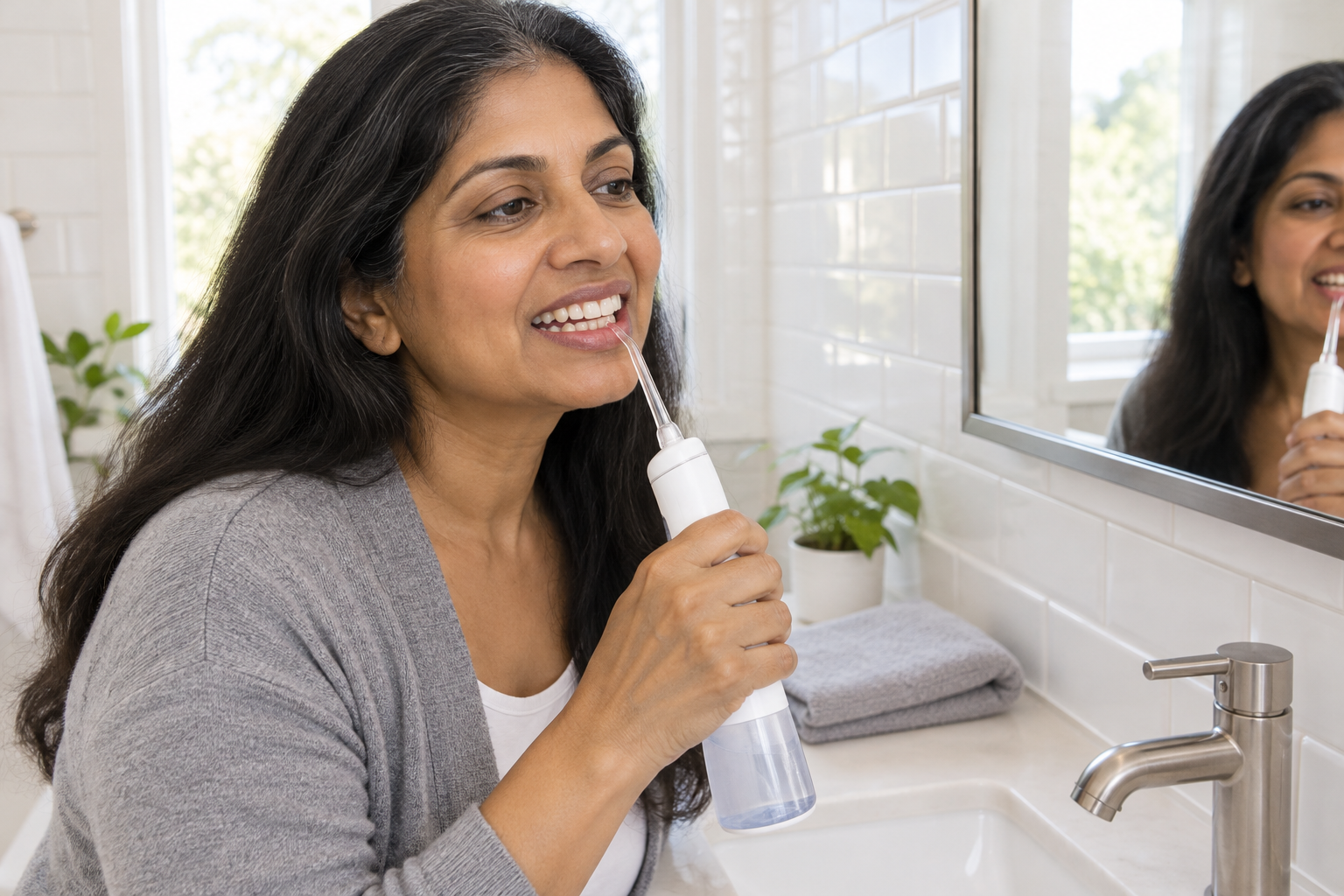
– Cleaning between teeth daily (ask your dentist which tool works best for your specific situation — this is not one-size-fits-all)
– Drinking enough water throughout the day, particularly important if certain medications leave your mouth dry
– Attending regular professional cleanings, which remove buildup that home care cannot reach
Home habits that will not reverse existing recession but also will not hurt:
– Rinsing with water after meals
– Staying well hydrated
– Supporting your overall health as consistently as possible
Being honest about limits is not pessimism — it is what actually helps you make good decisions.
‘I take several medications. Could they be making this worse?’
This is a question many women over 55 have and almost nobody asks. Dryness of the mouth is a known side effect of many common medications, and a mouth that is consistently dry has a harder time maintaining a balanced environment. Saliva does a great deal of quiet, unrecognised work in keeping the mouth healthy.
If you suspect this may be a factor for you, it is absolutely worth raising with your prescribing doctor or pharmacist. You do not have to solve it alone, and they will not think less of you for asking.
‘I am embarrassed to ask about the bacteria connection. Does that actually matter?’
It does, and it is worth understanding at a basic level. Research has drawn attention to the role of the oral microbiome — the community of bacteria that live naturally in the mouth — in gum and tooth health. The idea that a healthy mouth depends on maintaining a good balance of bacteria, not simply eliminating all bacteria, has gained significant traction in recent years.
Many common dental products contain ingredients that affect this bacterial balance. Whether or not any particular product is contributing to an imbalance in your mouth specifically is something a dental professional is better placed to evaluate than a search engine. But understanding that the mouth has its own microbiome worth supporting — not just surfaces worth scrubbing — is a genuinely useful frame.
‘How do I even talk about this with my dentist without feeling judged?’
Start with facts, not apologies. ‘I have noticed my gum line looks higher than it did a few years ago. I want to understand what is happening and what I can do about it.’ That is enough. A good dental professional will take it from there without a lecture. If yours does not, that is useful information about whether that practice is the right fit for your needs.
Come prepared with specifics: which teeth look most affected, whether you have noticed any tenderness or sensitivity, whether you grind at night (or have been told you do), and what your current brushing routine looks like. The more accurate the picture, the more useful the conversation.
‘Should I be looking at supplements to support my oral health?’
This is increasingly a question women are asking, particularly those already engaged with preventive health. The honest answer is that supporting the oral microbiome is a legitimate area of interest — and probiotic-based approaches designed for oral health have been growing in this space.
ProDentim is a chewable probiotic supplement formulated specifically for teeth and gum health. It contains 3.5 billion probiotic strains per serving, including Lactobacillus Paracasei, which is noted to support gum health, and B.lactis BL-04®, noted to support the balance of mouth bacteria and the respiratory tract. It also contains a proprietary blend including inulin (noted to support good bacteria), malic acid from strawberries (noted to help maintain tooth whiteness), and peppermint as a natural ingredient.
ProDentim is a natural formula, gluten free, non-GMO, and non-habit forming. As the manufacturer notes, if you are currently taking other medications or have a medical condition, showing the product to your doctor before starting is a sensible step — and consistent with the kind of thoughtful approach that already characterises how women like you approach their health.
It is not a replacement for professional dental care or for addressing the specific causes of your recession. It is one part of a broader picture of oral health support.
If you are interested in learning more about how ProDentim supports gum and teeth health through probiotic science, you can read the full product details on our page.
Visit:
The page explains the formula, the ingredients, the 60-day money-back guarantee, and current package options — including the six-bottle option with free shipping. Take a look and decide whether it fits into your preventive health routine.
Disclosure: This article contains affiliate links. If you purchase through them, we may earn a commission at no additional cost to you.
Medical Disclaimer. The content on this site is for informational purposes only and is not medical advice. It is not a substitute for professional diagnosis or treatment. Always consult a qualified healthcare provider before starting any supplement, especially if you have a medical condition or take medication.
FDA Structure-Function Statement. These statements have not been evaluated by the Food and Drug Administration. This product is not intended to diagnose, treat, cure, or prevent any disease.