
Swollen Gums Back Teeth: Why Season and Travel Make It Worse
Heads up: this article contains affiliate links. If you buy through them, we may earn a commission at no extra cost to you.
Swollen gums around the back teeth are uncomfortable at the best of times. But if you have ever noticed that the tenderness flares up after a long flight, during a cold snap, or right after a holiday week of eating differently, you are not imagining it. Swollen gums back teeth sufferers frequently report that the problem seems to cycle with the seasons, with travel, and with changes in daily routine — and there are real, practical reasons for that.
This article explains those reasons clearly, tells you which warning signs mean you should call a dentist quickly, and gives you an honest look at what you can do every day to support your gum and tooth health no matter what time of year it is.
Why the Back of the Mouth Is Already Vulnerable
The molars and the gums that surround them are harder to reach with a toothbrush and harder to rinse clean than the front teeth. Food and debris tend to collect in the pockets and grooves back there. When gum tissue becomes puffy or tender around one of those back molars, it usually means that something is irritating or disrupting the tissues in that spot — whether that is trapped food, tartar build-up, a crack in the tooth, or a pocket that has deepened over time.
Swelling around the very last molar — particularly if a wisdom tooth is partially through the gum — can be especially stubborn, because a flap of gum tissue can trap particles every single time you eat. Swelling in that spot can go from mild to quite painful surprisingly fast.
One thing the top search results often leave out: the swelling around a back tooth is not always straightforward to self-diagnose. Gum irritation, a tooth-root concern, and a trapped-food problem can all look and feel similar on the surface. Only a dental professional can tell them apart properly — and that matters, because the approach differs for each one.
How the Seasons Change Things
Winter and Cold Weather
Cold weather brings a cluster of habits that are hard on the back of the mouth:
- Breathing through the mouth. When seasonal sniffles have you congested, mouth-breathing dries out the oral tissues. A drier mouth means less natural rinsing action from saliva, which allows debris and bacteria to sit longer in those hard-to-reach back pockets.
- Hot drinks and cold air together. Rapid temperature shifts — sipping hot tea and then stepping outside — can make already-sensitive gum tissue feel even more irritated around tender spots.
- Holiday eating patterns. Starchy, sugary, sticky foods eaten in larger quantities during November and December tend to lodge between back teeth. If flossing or brushing slips even slightly during the busy season, irritation around the molars can build up faster than usual.
Summer and Warm Weather
Summer has its own version of the same problem:
- Dehydration. Warmer temperatures increase the risk of mild dehydration. Saliva production drops when you are not drinking enough water, and saliva is one of the mouth’s natural defences. Less saliva means more time for irritants to sit against the gum tissue.
- Outdoor eating. Corn on the cob, barbecue ribs, seeds, popcorn, and tough meats are summer staples — and notorious for wedging themselves between back teeth and the surrounding gum.
- Irregular schedules. Long summer days, later bedtimes, and looser routines often mean that the nightly brush and floss session gets skipped or rushed. For gums that are already borderline tender, one or two missed evenings can tip things over.
Spring and Autumn Transitions
The transitional seasons bring fluctuating temperatures and an uptick in seasonal sniffles for many people. The same mouth-breathing cycle described above tends to recur. Added to that, spring and autumn are common times for school and work schedules to shift, which disrupts the oral hygiene habits that had become automatic.
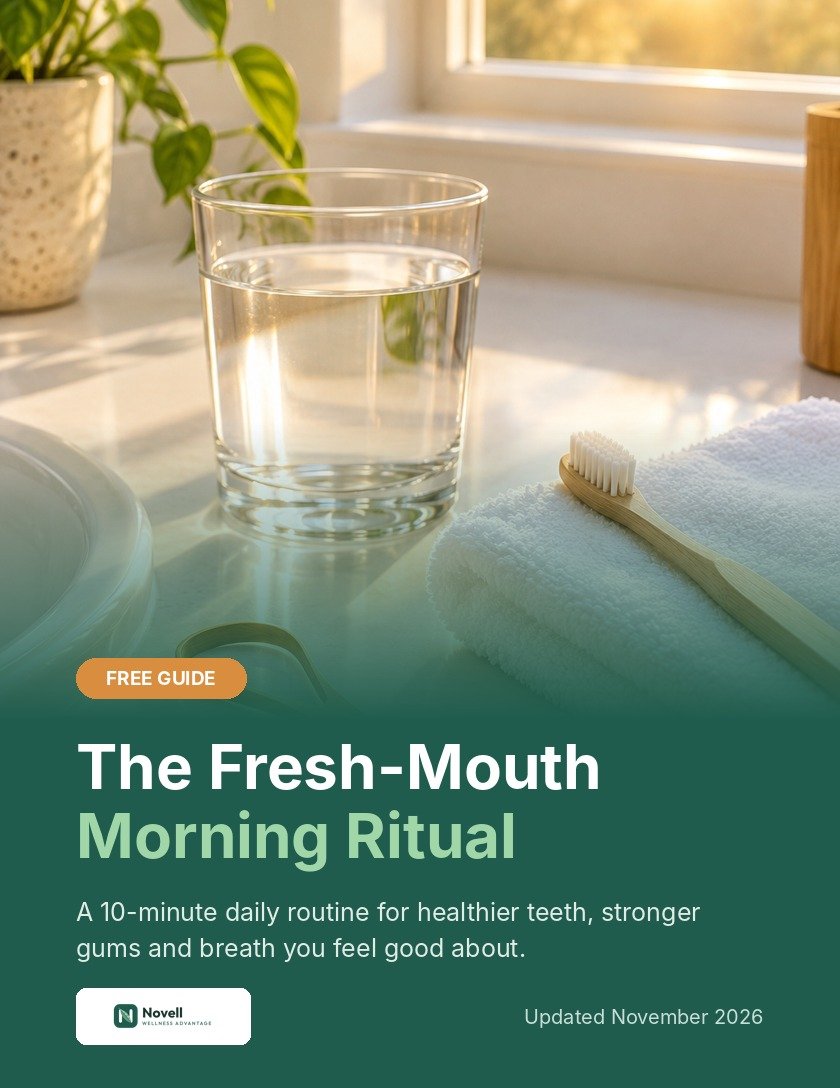
Free guide
The Fresh-Mouth Morning Ritual: A 10-Minute Daily Routine for Healthier Teeth, Stronger Gums, and Breath You Feel Good About
Download our free 10-minute morning ritual guide and build a simple daily routine that supports your teeth, gums, and breath — no expensive products required. Enter your first name and email and you’ll get it right away.
You’ll get the guide right away, plus a few short tips by email. Unsubscribe any time. Privacy Policy
Travel Makes Swollen Gums Around the Back Teeth Worse — Here Is Why
Travel is a perfect storm for the back of the mouth.
Cabin air on flights is extremely dry. Airline cabins typically maintain very low humidity, which dries out oral tissues over the course of a few hours. The gum tissue around the back molars, already prone to trapping debris, sits in that dry environment for the entire flight.
Eating patterns change completely. Airport food, road-trip snacks, and restaurant meals eaten at different hours all differ from the balanced home routine. Meals eaten quickly, in unfamiliar portions, with unfamiliar ingredients, mean more debris and more erratic brushing windows.
Routines are disrupted. The toothbrush is in the suitcase. The floss was left on the bathroom counter. The hotel bathroom does not have a good light. These small disruptions add up. Research consistently shows that oral hygiene effort drops during travel — not because people stop caring, but because the environment makes it harder.
Time-zone shifts and fatigue. When you are exhausted from crossing time zones, the evening routine is the first thing to get cut short. For someone whose back gums are already a little puffy before the trip, skipping or rushing the nighttime clean can make the return flight noticeably worse.
What to do differently when you travel:
– Pack a small dental kit in your carry-on, not your checked bag.
– Drink water consistently throughout the flight rather than waiting until you feel thirsty.
– Floss before bed even if everything else slips.
– If you chew gum during travel, choose a sugar-free variety to help stimulate saliva.
Warning Signs That Mean Do Not Wait
Seasonal and travel-related flare-ups often settle down once routine returns. But some signs are not routine and need prompt professional attention:
- Pus or a bad taste in the mouth that does not go away.
- Noticeable facial puffiness around the cheek or jaw.
- Fever alongside gum tenderness.
- Difficulty opening your mouth or swallowing.
- Pain that is worsening steadily over 24 to 48 hours rather than easing.
Any of these alongside swollen gums around the back teeth is a reason to call a dentist or seek same-day care. These are not signs of a seasonal flare — they can indicate something deeper that needs professional assessment and treatment.
What a Dentist Looks For That You Cannot See at Home
One gap in most online information is a clear explanation of how a dentist actually determines what is causing the swelling. The professional will:
- Probe the depth of gum pockets around each affected tooth.
- Check for signs of decay, cracks, or root concerns — often using X-rays.
- Assess whether a wisdom tooth is partly erupted and whether the gum tissue over it is trapping material.
- Look for signs of a pocket that has become a site of ongoing irritation.
- Consider your overall health history, any medications you take, and whether pregnancy or hormonal changes might be a factor (all of these can affect gum tissue behaviour).
Appearance alone cannot reliably distinguish garden-variety gum puffiness from something that needs treatment. That is why persistent or worsening swelling in the back of the mouth always deserves a professional set of eyes.
What You Can Do Every Day — Especially When Life Gets Busy
The seasonal and travel patterns above share a common thread: they all disrupt the daily habits that keep the mouth environment balanced. Supporting that environment consistently is what matters most.
Brush the back teeth with the same attention as the front ones. Most people spend most of their brushing time on the visible teeth. Angle the brush to reach the gumline around the last molars.
Floss or use an interdental tool at the back. The spaces between back teeth are where debris hides longest. Many people floss the front teeth carefully but stop before they reach the molars.
Stay hydrated. Drinking enough water throughout the day — especially during winter heating season and summer warmth — keeps saliva doing its natural work.
Keep the routine consistent during disruptions. When travel or holiday schedules hit, the oral hygiene routine is easy to deprioritise. Treating it the same way you would treat taking a daily supplement — non-negotiable, regardless of the schedule — makes a real difference over time.
Consider what you are putting in your mouth regularly. The mouth is an ecosystem. What lands there every day, including the products you use and the food you eat, shapes the balance of that environment. Supporting a healthy bacterial balance in the mouth is now a focus of real research interest, with growing understanding of the oral microbiome.
A Note on the Oral Microbiome
One thread you will find running through newer thinking about gum and tooth health is the role of the oral microbiome — the community of bacteria living in the mouth. A well-balanced microbiome may help the mouth resist some of the disruptions that seasonal changes and travel bring. This is an evolving area of research, and it is one reason that probiotic-based approaches to oral health have attracted attention.
If you are curious about supporting your mouth’s natural bacterial balance alongside your regular dental care routine, there are now products specifically formulated to address that — including chewable probiotic blends that, according to their makers, are designed to repopulate the mouth with beneficial bacteria. These are not a replacement for brushing, flossing, or visiting your dentist. But for someone already committed to a natural health approach, they can be a meaningful addition to a consistent daily habit.
The Practical Summary
Swollen gums around the back teeth tend to flare when your mouth’s normal defences are lowered — and cold weather, holiday eating, dehydration, travel, and disrupted routines are exactly the conditions that lower those defences. Understanding the pattern helps you stay ahead of it.
The fundamentals — thorough brushing at the back, cleaning between teeth, staying hydrated, and keeping your dental appointments — matter most. When warning signs appear alongside the swelling, get professional advice promptly. And when life gets busy or the seasons shift, treating your oral health routine as non-negotiable is the single most useful thing you can do.
If you have been exploring natural approaches to gum and tooth health, you might find it worth learning about ProDentim — a chewable probiotic blend that the vendor says is formulated to support the health of your gums and teeth by repopulating the mouth with beneficial bacteria. The vendor’s page explains the specific probiotic strains included, how the formula is designed, and what a 60-day money-back guarantee covers.
You can read the full product details here:
This is a product page, not a substitute for professional dental advice. If you are experiencing persistent or worsening swollen gums, please speak with your dentist.
Disclosure: This article contains affiliate links. If you purchase through them, we may earn a commission at no additional cost to you.
Medical Disclaimer. The content on this site is for informational purposes only and is not medical advice. It is not a substitute for professional diagnosis or treatment. Always consult a qualified healthcare provider before starting any supplement, especially if you have a medical condition or take medication.
FDA Structure-Function Statement. These statements have not been evaluated by the Food and Drug Administration. This product is not intended to diagnose, treat, cure, or prevent any disease.