
Floss Bleeding Gums: A Daily Routine That Helps
Heads up: this article contains affiliate links. If you buy through them, we may earn a commission at no extra cost to you.
If you notice floss bleeding gums every single morning, you are not alone — and you are probably wondering whether you are doing something wrong, or whether something bigger is going on. The honest answer is: sometimes it is technique, sometimes it is consistency, and sometimes your mouth simply needs a little more support than brushing and flossing alone can provide.
This article is not about scaring you into a dentist’s chair. It is about giving you a realistic, manageable daily routine you can actually follow — one that covers movement, food, hydration, timing and a few habits that many people overlook entirely.
Why Gums Bleed When You Floss
When gums bleed when I floss, the most common reason is that the gum tissue has become tender from plaque sitting along the gumline. Plaque is a soft, sticky film that builds up between cleanings. When it lingers, the gums can become puffy and sensitive — meaning even gentle flossing draws a little blood.
The second most common reason is infrequent flossing. If you only floss occasionally, your gums are simply not used to contact at the gumline. A little bleeding in the first week or two of a new flossing routine is common. That said, bleeding that continues week after week is worth paying attention to, and persistent tenderness in just one area of the mouth — rather than all over — deserves a conversation with your dentist.
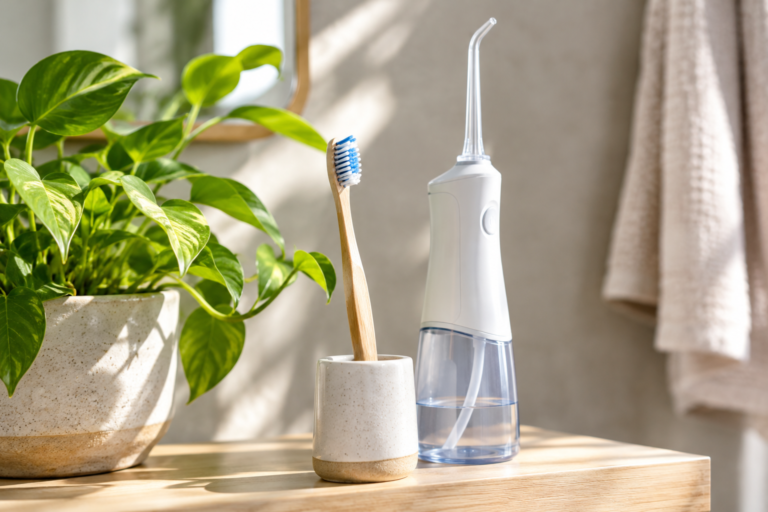
Technique matters too. Snapping the floss down hard between teeth, or scrubbing back and forth, irritates the gum tissue. The goal is to slide the floss gently down each side of every tooth, curving it slightly against the tooth surface and moving it up and down — not sawing sideways. If regular floss is uncomfortable or you have limited dexterity, a water flosser or floss picks can be gentler and easier to control.
Morning: Start Gentle
Free guide
The Fresh-Mouth Morning Ritual: A 10-Minute Daily Routine for Healthier Teeth, Stronger Gums, and Breath You Feel Good About
Download our free 10-minute morning ritual guide and build a simple daily routine that supports your teeth, gums, and breath — no expensive products required. Enter your first name and email and you’ll get it right away.
You’ll get the guide right away, plus a few short tips by email. Unsubscribe any time. Privacy Policy
6:30 – 7:00 AM — Rinse, then floss before you brush
Many dental hygienists suggest flossing before brushing rather than after. Flossing first loosens debris and plaque between the teeth; brushing then clears it away. Start with a plain water rinse to hydrate the mouth tissues. Then floss slowly, one tooth at a time, using the curved technique described above. If you notice bleeding when you floss, do not stop — stopping reinforces the cycle of infrequent flossing that keeps gums tender. Gentle consistency is what helps.
Brush for a full two minutes. Most people brush for thirty seconds. Use a soft-bristle brush and gentle pressure. Hard bristles and aggressive scrubbing can wear on gum tissue over time.
7:00 – 7:30 AM — Breakfast with gum-friendly foods
What you eat first thing matters for your whole mouth environment. Crunchy raw vegetables like celery or carrots actually help clean tooth surfaces naturally. Foods rich in calcium and phosphorus — think plain yoghurt, eggs, cheese — provide minerals your teeth use. Fruit is fine, but rinse your mouth with water after eating acidic fruits rather than brushing immediately; enamel is temporarily softened by acid and brushing straight away can be more abrasive.
Stay away from sugary drinks first thing in the morning. Sugar feeds the bacteria that produce acids in your mouth, which is hard on both teeth and gum tissue.
7:30 – 8:00 AM — Movement
A short morning walk or twenty minutes of light movement supports circulation throughout the body, including to gum tissue. You do not need an intense workout — a brisk ten-minute loop around the block counts. The connection between whole-body circulation and oral tissue health is real, even if it is rarely mentioned on toothpaste packaging.
Midday: The Habits Most People Skip
12:00 – 1:00 PM — Lunch and a water habit
Drink water consistently throughout the day. A dry mouth creates an environment where bacteria are less diluted and more able to settle along the gumline. If you tend to drink coffee all morning and nothing else until lunch, your mouth is drier than it should be for hours at a time.
After lunch, rinse with water. If you can brush, do — but a simple water rinse after eating removes a surprising amount of loose debris. Carrying a small bottle of water and rinsing after meals and snacks is one of the most underrated habits for gum comfort.
1:00 PM — Check your stress
This sounds odd in a dental routine, but chronic stress can affect how your body responds to everyday irritants — including gum tenderness. Even a five-minute walk outside after lunch, or a few slow breaths at your desk, is worth building in. It is not a cure for anything, but a genuinely calm afternoon is easier on your whole body.
Afternoon: Fuel Without Wrecking the Work
3:00 PM — Smart snacking
Afternoon is when sugar cravings often hit hardest. A handful of nuts, a small piece of cheese, raw veg with hummus, or a plain piece of fruit are all better for your mouth than crackers, sweets or fruit juice. Each time you eat something sugary or starchy, bacteria in the mouth go through an acid cycle. Choosing snacks that do not spike that cycle means your gum tissue gets more rest between meals.
4:00 PM — Hydration check
If you have not had much water since lunch, drink a glass now. Afternoon is also when many people reach for a second coffee or tea. Both can dry out the mouth; balance them with water.
Evening: The Routine That Actually Protects You Overnight
7:00 PM — A light, mineral-rich dinner
Leafy greens, fish, eggs and legumes are good evening choices for overall health. Avoid eating very late — going to bed shortly after eating means food residue sits in the mouth for longer.
8:30 PM — The most important oral care of the day
Most dental professionals agree: the evening routine matters more than the morning one, because your mouth produces less saliva overnight, so whatever is left between your teeth stays there for hours.
Floss again. Yes, twice a day if you are dealing with bleeding gums when you floss. Use the same gentle technique. Follow with brushing. Some people also use a tongue scraper in the evening, which removes residue that can contribute to that stale taste people notice first thing in the morning.
9:00 PM — Wind-down and your supplement routine
If you take any supplements as part of your wellness routine, the evening is a natural time to build them in. Some people are adding an oral probiotic to their daily habits — the idea being that the mouth has its own microbiome of bacteria, and that supporting the balance of those bacteria is one more layer of care alongside brushing and flossing.
ProDentim is a chewable probiotic tablet that, according to the vendor, contains 3.5 billion probiotic bacteria across three strains — Lactobacillus Paracasei, B.lactis BL-04®, and Lactobacillus Reuteri, along with a proprietary blend that includes inulin, malic acid from strawberries, tricalcium phosphate and peppermint. According to the manufacturer, it is designed to support the balance of mouth bacteria and the health of gums and teeth. It is non-GMO, gluten free and free from stimulants.
It is one item in a broader routine — not a replacement for flossing, brushing or professional dental care. If you are curious, the product page has full details on what is in it and how it is intended to be used.
A Note on Persistent Bleeding
If bleeding gums when you floss has been going on for more than two to three weeks of consistent, correct flossing — or if one area of the mouth bleeds repeatedly and seems more tender than the rest — it is worth raising with your dentist. Some people also notice changes in gum comfort related to certain medications or health conditions; if that applies to you, your doctor or dentist is the right person to speak with. Bleeding that stops temporarily when you skip flossing but returns the moment you start again is not a sign to quit — it is a sign the gum tissue needs more consistent care, not less.
Pulling It Together
The floss bleeding gums cycle is frustrating precisely because doing the right thing — flossing — seems to make things worse in the short term. It usually does not. What actually helps is making the routine consistent, gentle and complete: morning and evening, with water, food choices and movement woven in throughout the day. That is a sustainable framework your mouth can work with.
No single product or habit fixes everything overnight. But a well-structured day gives your gums the best environment to stay comfortable and healthy.
If you are curious about adding an oral probiotic to your daily routine, you can read the full product details for ProDentim on our product page here:
The page covers the full ingredient list, how the product is intended to be used, and what the manufacturer offers in terms of a satisfaction guarantee.
Disclosure: This article contains affiliate links. If you purchase through them, we may earn a commission at no additional cost to you.
Medical Disclaimer. The content on this site is for informational purposes only and is not medical advice. It is not a substitute for professional diagnosis or treatment. Always consult a qualified healthcare provider before starting any supplement, especially if you have a medical condition or take medication.
FDA Structure-Function Statement. These statements have not been evaluated by the Food and Drug Administration. This product is not intended to diagnose, treat, cure, or prevent any disease.