Gums Under Teeth Swollen: What Improves First
Heads up: this article contains affiliate links. If you buy through them, we may earn a commission at no extra cost to you.
If your gums under teeth swollen in a way that feels unfamiliar or persistent, you are not alone — and you are right to pay attention to it.
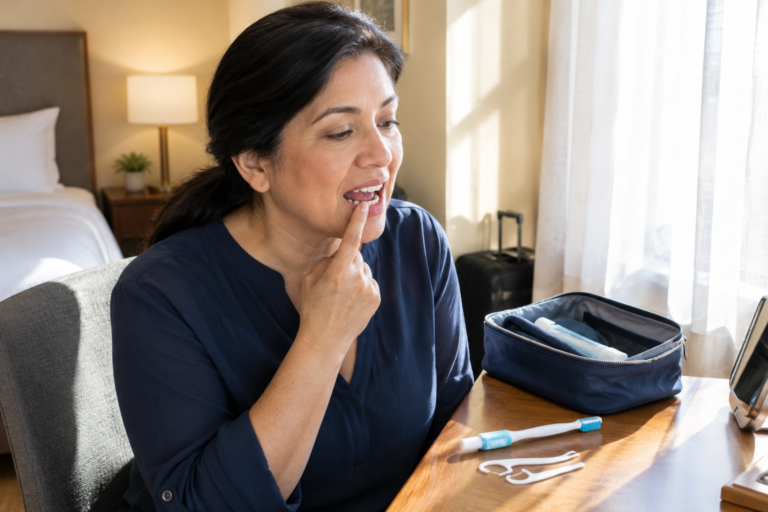
Swelling in this specific location, below or around the base of a tooth rather than just along the gumline, can feel alarming precisely because it is hidden. You cannot see it easily, you may only feel it with your tongue, and it does not always come with obvious pain. This article walks through what that swelling can mean, what a realistic path toward improvement actually looks like, and — just as honestly — what might not change on its own.
What Is Actually Going On Under the Gumline
The tissue that wraps around each tooth extends below what you can see in a mirror. When that tissue becomes tender, puffy, or visibly raised around a tooth root, the swelling has a location-specific cause that general gum advice often misses.
The most common reasons swelling appears in this specific spot include:
Trapped debris. Food and plaque that work their way into the pocket between tooth and gum can cause localised puffiness around just one or two teeth. This is different from generalised gum tenderness that runs along a whole section of the mouth.
Plaque buildup below the gumline. When plaque is not fully cleared from just below where the gum meets the tooth, the tissue responds with redness and puffiness. This is early-stage gum irritation, and it is the most common explanation for mild, non-painful swelling around specific teeth.
A localised pocket infection. When debris or bacteria become trapped and sealed in a deepened gum pocket, the area can swell and feel tender to pressure. This is different from an abscess, though it shares some characteristics.
A dental abscess. A collection of pus at the root of a tooth or in surrounding tissue causes more intense swelling, often with throbbing pain, a bad taste, tooth sensitivity, or visible pus. This is the category that needs prompt professional attention — and no amount of home care substitutes for it.
Irritation from a dental appliance, crown edge, or floss technique. Tissue at the base of a tooth can become chronically puffy from repeated mechanical irritation that you might not even notice.
Hormonal shifts. For women in their forties and beyond, changing hormone levels can make gum tissue more reactive to ordinary plaque levels that would not have caused the same response years earlier. This does not mean there is something dramatically wrong — but it does mean the threshold for swelling is lower than it used to be.
The Gap Most Articles Leave Out: Location Matters
Most general gum-swelling advice treats the mouth as one surface. But the location of the swelling genuinely changes what is likely happening:
- Swelling between two teeth is most often related to trapped food or plaque buildup in that specific contact point.
- Swelling circling one tooth at the gumline often points to plaque or debris in that tooth’s individual pocket.
- Swelling that feels deeper, almost behind the tooth root is more likely to involve deeper tissue and deserves professional evaluation sooner rather than later.
- Swelling at the back of the mouth, behind a back tooth can be related to wisdom teeth or tissue that partially covers a fully erupted tooth.
Knowing the location helps you describe it accurately to a dentist and helps you recognise whether basic home hygiene could plausibly address it or whether something else is at work.
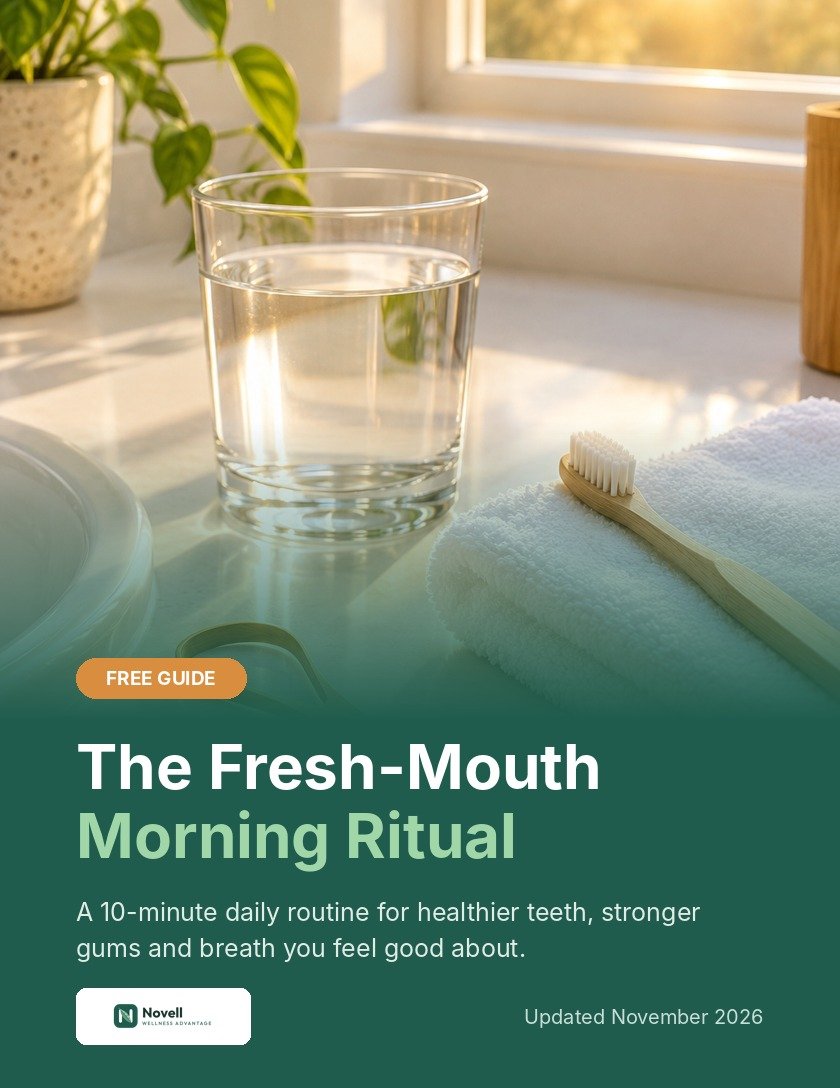
Free guide
The Fresh-Mouth Morning Ritual: A 10-Minute Daily Routine for Healthier Teeth, Stronger Gums, and Breath You Feel Good About
Download our free 10-minute morning ritual guide and build a simple daily routine that supports your teeth, gums, and breath — no expensive products required. Enter your first name and email and you’ll get it right away.
You’ll get the guide right away, plus a few short tips by email. Unsubscribe any time. Privacy Policy
What Improves First — An Honest Week-by-Week Look
This is the section most health articles skip entirely. They either promise quick results or avoid the question altogether. Neither is useful. Here is what an honest, realistic timeline looks like for someone whose swelling is mild-to-moderate, not infected, and driven by plaque or trapped debris:
Days one and two: not much. Tissue that has been irritated for days or weeks does not reset overnight. The most you might notice at this early stage is that the area feels slightly less pressured after thorough but very gentle cleaning. Some people notice nothing at all.
Days three through five: subtle softening. If the irritant has been cleared and you are not reintroducing it, the tissue may begin to feel slightly less taut. The swelling itself is unlikely to be visibly reduced, but tenderness to touch or tongue pressure sometimes eases during this window. Some people still notice nothing — this is normal, not a failure.
Week two: the first visible signs. For people whose swelling was caused by plaque buildup or trapped debris and nothing more serious, some visible reduction in puffiness can begin to appear around the ten-day mark. The colour may shift from an angry red toward a pinker, healthier tone. Bleeding on gentle brushing, if it was present, may start to ease.
Weeks three and four: meaningful change — if change is coming. By the end of a month of consistent, careful hygiene, early-stage gum irritation around one or several teeth should show clear improvement. If it has not, that is important information. Persistent or worsening swelling after three to four weeks of careful home care is a signal that the cause is not on the surface — and that a dentist needs to look below it.
What may not improve on its own at all:
– An abscess will not resolve without professional treatment. Home hygiene will not drain it.
– Swelling caused by a deep pocket infection needs professional cleaning below the gumline.
– Swelling related to a medication you are taking will not fully resolve while you remain on that medication — and you should never stop a prescribed medicine without speaking to your doctor first.
– Swelling accompanied by pus, fever, facial swelling, or difficulty swallowing is an urgent dental matter. These do not wait for a home-care trial.
When to Stop Waiting and Call a Dentist
The clearest rule: if you have been consistent with home hygiene for three to four weeks and the swelling is unchanged or worse, you have learned something important. The cause is not something surface cleaning can reach.
Call a dentist sooner — without waiting through a home-care trial — if:
– You notice pus, a foul taste, or a visible bump that feels fluid-filled
– The area is throbbing, especially at night or when you lie down
– You have facial swelling on the same side
– You have a fever alongside the dental symptoms
– The swelling is spreading, not staying localised
– A tooth feels loose or has changed in how it meets other teeth
These are not reasons to panic. They are reasons to move quickly.
What You Can Actually Do at Home — Carefully
For mild swelling with no signs of infection, home hygiene matters. But technique matters more than effort:
Brush gently, not harder. Aggressive brushing does not clean below the gumline — it only damages the surface of gum tissue that is already tender. A soft-bristled brush at a slight angle toward the gumline is more effective and far less damaging.
Clean between teeth daily, but gently. If you are new to cleaning between teeth, your gums may bleed and feel sore for the first week or so. That is not a sign to stop — it is a sign that area needs attention. But force and snapping motions are not more effective and can make swelling worse.
Rinse with warm water after meals. Particularly around the tooth that is swollen, rinsing with warm water helps dislodge loose debris that might otherwise settle back into the pocket.
Do not skip the area because it hurts. This is one of the most common mistakes. Avoiding a tender spot allows debris and plaque to accumulate exactly where they are already causing trouble.
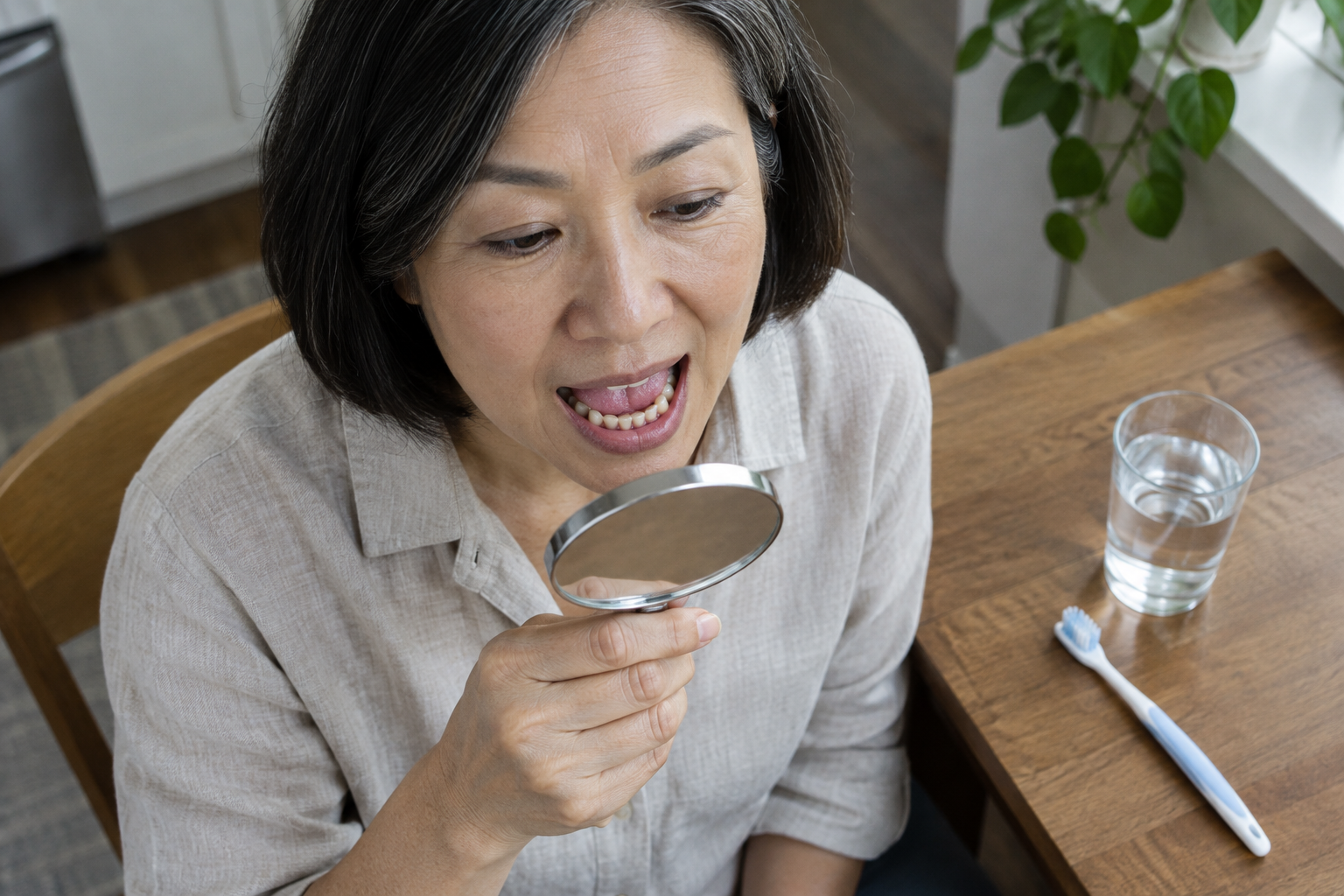
Watch the area. Keep a loose mental note of whether it is changing. Improvement that stalls after two weeks, or swelling that is growing, tells you the home-care ceiling has been reached.
The Role the Oral Microbiome Plays
Researchers looking at oral health have increasingly focused attention on the balance of bacteria that live in the mouth — not just which harmful bacteria are present, but whether the mouth has a healthy population of beneficial bacteria to keep the environment stable. When this bacterial balance is disrupted, gum tissue can become more reactive, and the normal protective environment around the teeth is weakened.
This is not a new fringe idea. It reflects a broader understanding of how microbial balance — in the mouth as elsewhere — affects how tissue responds to everyday exposures like food, plaque, and mild mechanical stress.
For women over 45, this is worth understanding. Changing hormonal patterns can make gum tissue more reactive to ordinary plaque levels. At the same time, if the mouth’s beneficial bacterial population is thin, there is less natural buffering between normal daily exposures and an exaggerated tissue response.
This understanding has led some people to look at whether supporting the mouth’s beneficial bacteria population — alongside careful mechanical hygiene — adds something meaningful to their routine. It is a reasonable question. It does not replace professional care when professional care is needed. But for those managing mild swelling and looking for a comprehensive approach to mouth health, it is worth knowing that the microbiome conversation exists and that it is grounded in legitimate research.
ProDentim is a chewable probiotic tablet formulated with 3.5 billion probiotic strains alongside a proprietary blend of nutrients, with the stated purpose of supporting the balance of beneficial bacteria in the mouth and the overall health of the gums and teeth. The strains it contains — including Lactobacillus Paracasei, B. lactis BL-04, and Lactobacillus Reuteri — were selected with gum and tooth health in mind. It is not a treatment for infection or acute swelling. It is a daily support supplement for people who want to take a proactive, natural approach to maintaining the kind of oral environment where good bacteria can thrive.
If that approach interests you, more details are on the product page linked below.
If you have been dealing with persistent gum tenderness and want to explore a natural daily support option alongside your hygiene routine, the ProDentim product page has full details on what is in it and how it works.
Visit the product page here:
Disclosure: This article contains affiliate links. If you purchase through them, we may earn a commission at no additional cost to you.
Medical Disclaimer. The content on this site is for informational purposes only and is not medical advice. It is not a substitute for professional diagnosis or treatment. Always consult a qualified healthcare provider before starting any supplement, especially if you have a medical condition or take medication.
FDA Structure-Function Statement. These statements have not been evaluated by the Food and Drug Administration. This product is not intended to diagnose, treat, cure, or prevent any disease.