What Causes Receding Gum — and What to Ask Your Dentist
Heads up: this article contains affiliate links. If you buy through them, we may earn a commission at no extra cost to you.
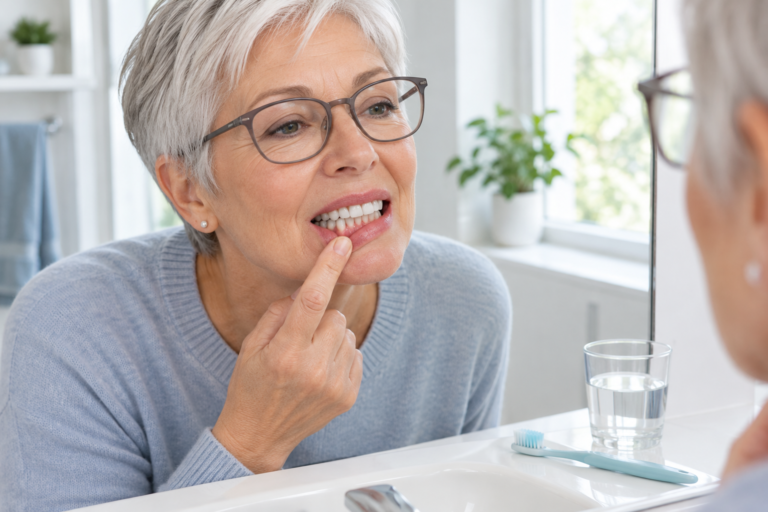
Understanding what causes receding gum is the first step toward protecting your teeth for the long haul. If you have noticed that your teeth look longer than they used to, or that you feel more sensitivity near the gumline, you are not imagining it — and you are not alone. Gum recession is one of the most common concerns for women in their 50s, 60s, and 70s, and yet many dental appointments end without a clear explanation of what is actually driving it.
This article is not going to repeat the standard list you have already read online. Instead, it is going to help you get a genuinely useful conversation out of your next dentist visit — including the specific questions to ask, what answers to push back on, and how to leave with a real plan rather than a ‘we’ll keep an eye on it.’
What Causes Receding Gum: The Short Version
Gum tissue pulls back from the tooth surface for several different reasons, and the cause matters enormously — because the right next step depends entirely on which one applies to you.
The most common drivers include:
Tartar and plaque buildup near the gumline. When plaque is not fully removed, it hardens into tartar, which irritates the gum tissue over time. The gum responds by gradually pulling away from the tooth.
Brushing pressure and technique. Brushing too hard, or using a toothbrush with stiff bristles, can physically wear away gum tissue over months and years. This type of recession often appears first on the outer surfaces of the upper teeth.
Grinding or clenching the teeth. The repeated force placed on teeth during grinding — often during the night — puts stress on the gum and bone structure. Many people have no idea they grind until a dentist points it out.
Thin or naturally delicate gum tissue. Some people are simply born with thinner gum tissue, which is more vulnerable to recession regardless of how carefully they brush. This is not a failure on your part — it is anatomy.
Tooth position and bite alignment. When a tooth sits slightly outside the normal arch of the jaw, the gum covering it can be stretched thin. This kind of recession is structural rather than hygiene-related.
Hormonal changes over time. The decades after menopause bring shifts in tissue density throughout the body, including in the mouth. Gum tissue can become more fragile and more reactive to everyday stressors.
Mouth-breathing and dryness. A consistently dry mouth — whether from breathing habits, certain health products, or reduced saliva flow — changes the environment in which gum tissue lives. A well-hydrated oral environment is more protective; a dry one is less so.
Here is what many articles leave out: these causes can overlap. You may have naturally thin tissue and brush too hard and experience some nightly clenching — and all three are contributing simultaneously. Identifying the right combination is what a thorough dental evaluation is for.
Why Your Appointment Might Not Be Giving You What You Need
Most dentist visits are structured around treatment, not education. Your hygienist cleans your teeth, the dentist checks for cavities, and you are out the door in forty minutes. If you do not ask specific questions, the conversation about why your gums are receding — and what you can actually do about it — often does not happen at all.
There is also a gap between what dentistry traditionally offers (reactive treatment after a problem exists) and what many women in midlife and beyond are looking for: a preventive conversation that helps them protect what they have.
You can close that gap yourself, with the right questions.
Free guide
The Fresh-Mouth Morning Ritual: A 10-Minute Daily Routine for Healthier Teeth, Stronger Gums, and Breath You Feel Good About
Download our free 10-minute morning ritual guide and build a simple daily routine that supports your teeth, gums, and breath — no expensive products required. Enter your first name and email and you’ll get it right away.
You’ll get the guide right away, plus a few short tips by email. Unsubscribe any time. Privacy Policy
The Practical Script: What to Ask at Your Next Appointment
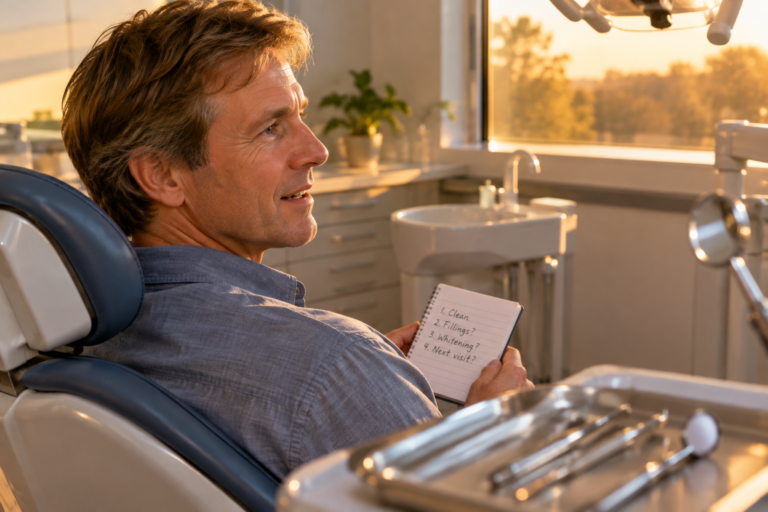
Print this out or take a photo and bring it with you. You do not need to ask all of these — pick the three or four most relevant to your situation.
Before the cleaning starts
‘I have noticed my teeth look longer in certain areas and I am feeling more sensitivity near the gumline. Before we start, I would like a few minutes at the end to talk about what might be causing this and what I can do to slow it down. Can we make sure to leave time for that?’
Setting that expectation at the beginning means you are far less likely to run out of time.
During the exam
‘Can you tell me which teeth are showing the most recession — and do you have a sense of what is driving it in my case specifically?’
This is the key question. You want your specific cause, not a general explanation. If the answer is vague, follow up with:
‘Is this more likely from brushing technique, from tartar buildup, from grinding, or from the structure of my teeth and gums?’
Most dentists can give you a reasonable working answer — they just need to be prompted.
‘Has anything changed noticeably since my last appointment? Is it progressing, or does it look stable?’
Knowing whether it is active or stable changes everything about how urgently you need to act.
About your brushing habits
‘Can you show me on a model — or just describe — what a pressure level and technique that is safe for my gums actually looks like?’
Most people who brush too hard have no idea they are doing it. Many have been brushing the same way for forty years. A quick demonstration from your hygienist is worth more than any article.
‘Is an electric toothbrush likely to be better for my situation, and if so, is there a particular type you would suggest?’
About grinding
‘Is there any sign that I might be grinding or clenching at night? What would I look for, and is a night guard something worth considering?’
Grinding is underdiagnosed in women over 55, partly because it is often associated with stress and sometimes dismissed. Bring it up directly.
About your mouth environment
‘I have heard that the balance of bacteria in the mouth plays a role in gum health. Is that something you think about, and is there anything you would suggest beyond brushing and flossing to support a healthier oral environment?’
This opens the door for a broader conversation about your oral microbiome — the community of bacteria that lives in the mouth and that research suggests plays a meaningful role in gum health. Your dentist may or may not have strong opinions here, but asking the question signals that you are thinking preventively.
About prevention versus treatment
‘If I do everything right from here — good technique, regular cleanings — can the recession stop progressing? And is there any chance the gum tissue can recover, or is what is gone gone?’
This is a question most patients never ask, and it is one of the most important. The honest answer is that in most cases, lost gum tissue does not grow back on its own. What you can do is stop further loss. That reframe — from ‘fixing’ to ‘preserving’ — is exactly the mindset that serves you best at this stage.
Before you leave
‘Is there anything I should be doing between now and my next cleaning that would make a measurable difference? And how often do you think I should be coming in given where my gums are right now?’
Twice-yearly cleanings are standard, but someone with active recession may benefit from more frequent visits. Ask directly.
How to Get a Useful Answer When the Visit Feels Rushed
If you find the dentist moving quickly, it is completely reasonable to slow things down with a phrase like: ‘I want to make sure I understand this before I leave — can you give me thirty seconds on what you think the main driver is?’
You can also ask for written notes or for the hygienist to follow up with you while you are still in the chair. Some practices have patient portals where you can send questions after the visit.
Bring a notepad or use your phone to jot down what the dentist says. You will not remember it perfectly at home, and the details matter.
One More Thing to Raise: Supporting Your Oral Microbiome
If your dentist opens the door to a conversation about the bacterial environment in your mouth — or even if they do not — it may be worth exploring what you can do at home to support a healthier oral microbiome alongside your brushing and flossing routine.
One option that some women in this age group have begun asking their dentists about is a probiotic supplement specifically formulated for oral health. ProDentim is one such product: a chewable tablet containing 3.5 billion probiotic bacteria (the vendor’s figure), from strains including Lactobacillus Paracasei, B.lactis BL-04®, and Lactobacillus Reuteri, along with a proprietary blend of four plant-based ingredients including inulin, malic acid from strawberries, tricalcium phosphate, and peppermint. According to the vendor, the formulation is non-GMO, gluten-free, and free from stimulants.
This is not a treatment for any dental condition, and it does not replace your dentist’s recommendations. But if you are already asking your dentist about supporting your oral environment more broadly, it is a reasonable addition to the conversation.
If you would like to learn more before bringing it up at your appointment, the product page has more detail on the ingredients and how the formula is intended to work.
If you want to read more about ProDentim — including a full breakdown of the ingredients and what the formula is designed to do — visit the product page at Novell Wellness Advantage before your next appointment:
The page also covers the 60-day money-back guarantee, so you can review the full terms before deciding anything.
Disclosure: This article contains affiliate links. If you purchase through them, we may earn a commission at no additional cost to you.
Medical Disclaimer. The content on this site is for informational purposes only and is not medical advice. It is not a substitute for professional diagnosis or treatment. Always consult a qualified healthcare provider before starting any supplement, especially if you have a medical condition or take medication.
FDA Structure-Function Statement. These statements have not been evaluated by the Food and Drug Administration. This product is not intended to diagnose, treat, cure, or prevent any disease.