
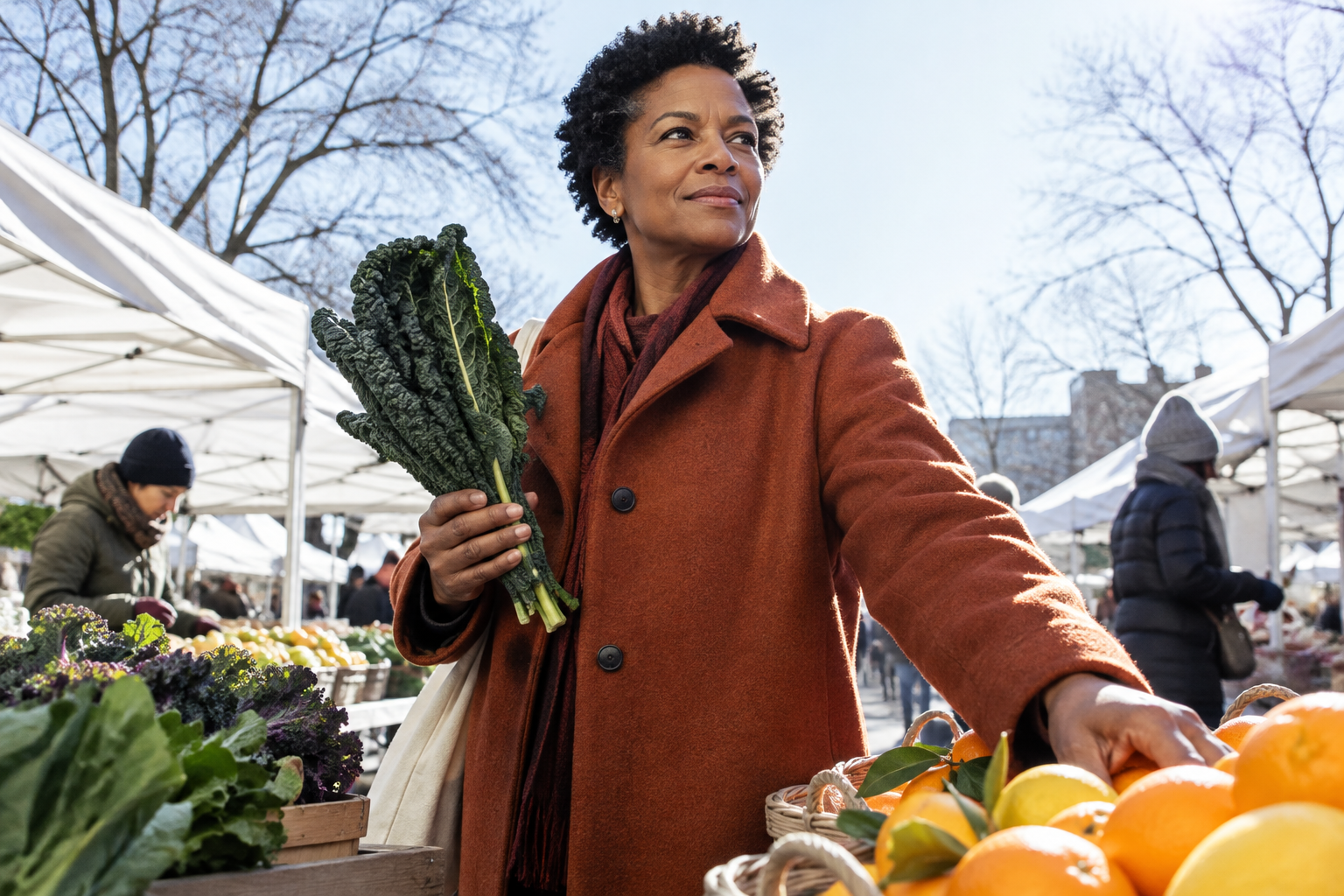
Mediterranean Diet Brain Health: What Changes by Season
Heads up: this article contains affiliate links. If you buy through them, we may earn a commission at no extra cost to you.
If you’ve been reading about mediterranean diet brain health, you’ve probably seen the same list: olive oil, fish, leafy greens, legumes, nuts, whole grains. Good information. But almost every article stops there — as if you eat the same foods in the same rhythm every single month of the year.
You don’t. And that gap matters more than most people realize.
What you actually eat, how often you cook at home, how much sunlight you get, and how active you stay all shift — sometimes dramatically — depending on the time of year and whether you’re traveling. Those shifts affect how consistently you can follow a brain-supportive eating pattern. And consistency, as anyone who has studied the Mediterranean diet and brain health seriously will tell you, is where most of the benefit lives.
This article is about the parts nobody explains: how the seasons quietly undermine your best intentions, and what to do differently at each one.
Why Consistency Matters More Than Any Single Food
The Mediterranean eating pattern is not a single superfood or a 30-day cleanse. It’s an ongoing way of eating — one built around whole, minimally processed foods, healthy fats, plenty of plant-based variety, and limited processed sugar and red meat. The research that associates this pattern with better cognitive outcomes consistently looks at people who maintain it over months and years, not people who do it perfectly for a few weeks and then slide.
When a season disrupts your routine — or when a week of travel upends everything — you’re not just missing a meal plan. You’re interrupting a pattern your brain thrives on. The goal of this article is to help you protect that pattern when outside conditions make it harder.
Winter: The Season That Tests the Pattern Hardest
For most men over 55, winter is the season most likely to knock a brain-supportive eating routine sideways. Here’s why.
Fresh produce availability drops — and so does variety.
The Mediterranean pattern depends heavily on plant diversity: different-colored vegetables, fresh herbs, seasonal fruits. In winter, that variety shrinks in most US grocery stores, prices rise for good produce, and the temptation to reach for comfort foods — heavier, more processed, higher in saturated fat — increases significantly.
What to do differently: Shift your thinking from ‘fresh only’ to ‘produce in any form.’ Frozen spinach, frozen broccoli, canned tomatoes, canned sardines in olive oil, and dried lentils are all consistent with Mediterranean-style eating and are actually more stable in winter than trying to find quality fresh options. The variety doesn’t disappear — it moves.
Shorter days reduce movement, which affects how your brain feels.
Physical activity supports cognitive energy. When cold weather cuts your walking, gardening, or golf rounds short, you may notice your thinking feels a little slower or foggier by mid-afternoon. This isn’t a character flaw — it’s a recognized seasonal pattern. The eating choices that follow low-energy days (grabbing whatever’s easiest, skipping the fish and reaching for something heavier) can quietly erode the eating pattern you’ve built.
What to do differently: Plan your two or three anchor meals for the week before the week starts — not in response to how you feel on Tuesday afternoon. A batch of lentil soup, a tin of sardines on whole grain bread, a handful of walnuts at your desk. Simple, pre-decided, no willpower required in the moment.
Holiday eating is a real disruption, not an imaginary one.
Thanksgiving through New Year is six weeks of social eating that rarely resembles anything Mediterranean. Heavy appetizers, sugary desserts, alcohol in higher quantities, and very little of the fish, olive oil, and leafy greens that anchor the pattern. One holiday dinner won’t undo months of good habits. Six weeks of repeated disruption can.
What to do differently: Use the ‘anchor and flex’ approach. Pick two or three non-negotiable Mediterranean habits you keep regardless — a daily handful of walnuts, olive oil on your vegetables, fish at least once a week — and let everything else flex around social occasions. You’re maintaining the pattern’s foundation, not achieving perfection.

Free guide
Fuel Your Focus: The Anti-Fog Nutrition Playbook for Adults Over 40
Get the free Anti-Fog Nutrition Playbook — practical meal guidance for adults over 40 who want all-day mental clarity. Enter your first name and email and you’ll get it right away.
You’ll get the guide right away, plus a few short tips by email. Unsubscribe any time. Privacy Policy
Spring: When Motivation Returns but Old Habits Linger
Spring is an interesting transition. Motivation to eat better tends to rise with the temperature. Fresh produce starts reappearing at farmers markets. You feel like cooking again.
But the habits that accumulated over winter don’t automatically vanish on March 21st. If you spent three months leaning on processed snacks, heavy carbohydrates, and skipping the fish, your taste preferences may have quietly drifted. Leafy salads feel like a bigger lift than they did in October.
What to do differently: Use the natural energy of spring to rebuild variety gradually rather than trying to overhaul everything at once. Add one new vegetable or legume to your weekly routine each week. Try a different kind of fish. Reintroduce fresh herbs — basil, parsley, oregano — which are inexpensive and add enormous variety without complicated cooking.
Spring is also the right time to re-establish a walking habit or outdoor routine, which supports the cognitive energy that makes brain-supportive eating easier to sustain.
Summer: The Season That Looks Easy but Has Hidden Traps
Summer appears Mediterranean-friendly on the surface: abundant fresh produce, lighter eating, more outdoor activity. And it often is — for a while.
But summer carries its own disruptions for men in their 60s and early 70s.
Travel and irregular schedules. Summer is peak travel season. Road trips, family visits, grandchildren staying over, and vacation weeks all disrupt the cooking routines that anchor a brain-supportive eating pattern. Restaurant meals increase. The control you have over what goes into your food decreases substantially.
Heat suppresses appetite — sometimes too much. In Sun Belt states particularly, summer heat can reduce appetite to the point where men simply eat less, grab whatever requires no preparation, and quietly cut back on the protein- and fat-rich foods (fish, nuts, olive oil) that the Mediterranean pattern depends on.
What to do differently when you travel:
This is worth its own section, because it’s one of the most common points of failure.
At a hotel: Most breakfast bars now carry eggs, plain oatmeal, fresh fruit, and nuts. Skip the pastries and build a plate from those. It’s not a Mediterranean feast, but it maintains the core principles: whole food, plant variety, protein, some healthy fat.
At a restaurant: Mediterranean-consistent choices are almost always available if you look for them without expecting them to be labeled. Grilled fish, side salads with olive oil and vinegar dressing, vegetable-based soups, hummus as an appetizer, beans in any form. The pattern adapts to nearly any cuisine if you know the principles rather than a specific food list.
In a vacation rental: This is actually your best option. The ability to cook even two or three meals yourself during a week away gives you enough control to maintain the pattern without feeling like you’re on a diet during your holiday. A quick grocery run on arrival for olive oil, canned fish, fresh vegetables, and a bag of walnuts costs less than one restaurant meal and covers your breakfast and lunch for most of the week.
At a family gathering: The host sets the menu, not you. Focus on what’s available rather than what’s missing. Salads, vegetable sides, grilled protein, fruit for dessert — these appear at most summer gatherings. Eat those first and eat enough of them. You’ll naturally eat less of everything else without making it a point of conversation.
Fall: The Window Most Men Miss
Fall is arguably the most underutilized season for Mediterranean-style eating in the United States. Produce variety peaks — squash, sweet potatoes, apples, pears, Brussels sprouts, beets, kale, pomegranates — and cool weather makes cooking enjoyable again after a summer of heat.
This is the season to build habits that will carry you through winter. Specifically:
Learn two or three simple bean-based dishes you enjoy. Lentil soup, white bean and vegetable stew, chickpea dishes. These are inexpensive, satisfying, easy to make in large batches, and entirely consistent with the Mediterranean pattern. When winter arrives and motivation dips, having a container of lentil soup in your refrigerator means you don’t have to decide anything.
Stock your pantry with Mediterranean staples that don’t expire quickly: extra virgin olive oil, canned tomatoes, canned fish (sardines, mackerel, tuna in olive oil), dried lentils and beans, whole grain pasta, nuts, and dried herbs. With these on hand, a brain-supportive meal is always 20 minutes away regardless of season or weather.
Re-establish an outdoor walking habit while the weather still invites it. Cognitive energy and physical movement support each other. Fall is a natural invitation to be outside — use it.
The Part Most Articles Don’t Say Out Loud
The Mediterranean diet and brain health research is based on overall eating patterns studied over long periods. No individual meal prevents anything, and no single season of better eating produces guaranteed outcomes. What the evidence consistently points to is the value of a sustained, varied, plant-forward eating pattern maintained across years — not achieved perfectly, but maintained directionally.
That means the question isn’t ‘Did I eat perfectly this week?’ The question is ‘Did I maintain the core of this pattern through winter, through the holidays, through summer travel, through Thanksgiving?’ If the answer is mostly yes — if olive oil, vegetables, fish, nuts, and legumes remain the backbone of how you eat across all four seasons — you’re doing what the evidence supports.
Seasonal disruptions are normal. The practical skill is knowing in advance what each season tends to knock loose, and having a simple plan ready before it happens.
If You’re Supporting Your Brain Year-Round
Some men who follow a Mediterranean-style eating pattern also look at targeted nutritional support as part of a broader daily routine. Phytomem One is a 10-ingredient supplement formulated specifically for brain and cognitive support — combining what the makers describe as a Cellular Defense Matrix with a Brain Fuel and Vitality Complex. According to the vendor, the formula includes ingredients studied for antioxidant support and healthy cellular energy, in a once-daily, stimulant-free capsule.
It’s not a replacement for how you eat. But if you’re committed to supporting your mental sharpness year-round — through winter, through travel, through seasons that make everything harder — it may be worth reading more about what’s in it and why those ingredients were chosen.
You can find a full breakdown on the product page linked below.
If you’re serious about supporting your focus and mental sharpness through every season, take a few minutes to read the full breakdown of Phytomem One — including the complete ingredient list and what each one is formulated to do.
Visit the Phytomem One product page here:
Disclosure: This article contains affiliate links. If you purchase through them, we may earn a commission at no additional cost to you.
Medical Disclaimer. The content on this site is for informational purposes only and is not medical advice. It is not a substitute for professional diagnosis or treatment. Always consult a qualified healthcare provider before starting any supplement, especially if you have a medical condition or take medication.
FDA Structure-Function Statement. These statements have not been evaluated by the Food and Drug Administration. This product is not intended to diagnose, treat, cure, or prevent any disease.