
Gum Receding Treatment: What to Tell Your Family First
Heads up: this article contains affiliate links. If you buy through them, we may earn a commission at no extra cost to you.
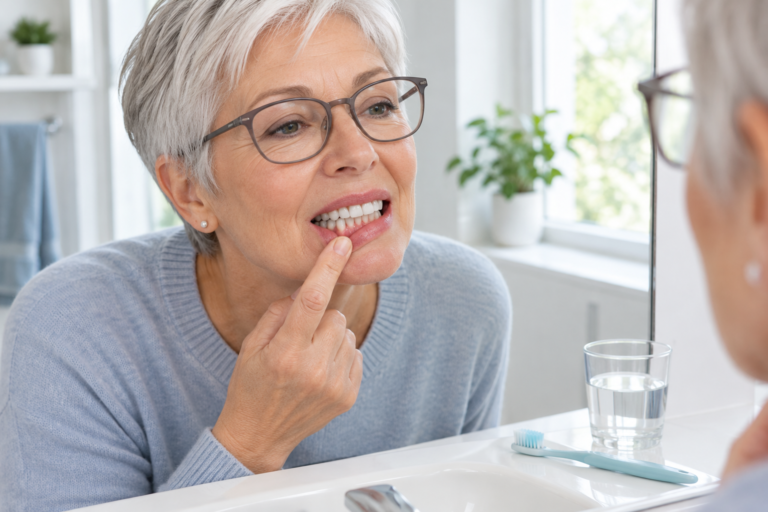
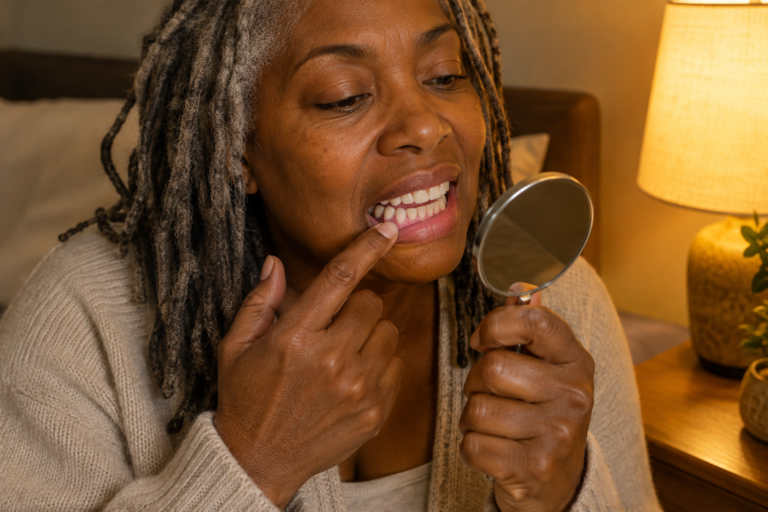
If you have been quietly researching gum receding treatment options at night, closing browser tabs before anyone walks in, you are not alone. Many women over 55 carry this particular worry in private — tucking it between other health concerns, telling themselves it probably is not that serious, and changing the subject when it comes up at dinner.
This article is not primarily about the biology of receding gums. It is about the quieter thing: why we hide what is happening, and how to actually talk to the people closest to us about it.
Why We Go Silent About This
There is something about dental concerns that feels almost embarrassing in a way that other health issues do not. A sore knee draws sympathy. A dental problem draws scrutiny — as if someone is wondering whether you brushed enough, flossed enough, went to the dentist enough. The shame is usually undeserved, but it is remarkably common.
For women in the 55-to-75 age range, the silence often runs deeper than embarrassment. Many have already spent real money on dental work — crowns, deep cleanings, treatments that felt reactive rather than preventive — and there is a reluctance to admit that something may still be getting worse. Saying it out loud to a spouse or an adult child can feel like opening a door to worry, expense, and advice you did not ask for.
So instead, you research alone. You notice the sensitivity when drinking cold water. You run your tongue across the gum line and feel what you feel. And you say nothing.
What Holding It In Actually Costs
The people who love you are not oblivious. They notice when you wince eating ice cream. They see you skip the apple at dinner. They watch you turn down hard foods at a restaurant and make a small excuse. Spouses especially tend to notice the quiet signals long before anything is said.
What silence costs is not just the chance for early action. It costs the connection that comes from being known. When we hide a health concern from the people closest to us, we are also quietly holding them at arm’s length from something real that is happening in our life.
And practically speaking, gum line receding treatment — whatever form it ultimately takes — often benefits from having a support person in the conversation. A second set of ears at a dental appointment. Someone who can help you remember what the dentist said. A person who can ask the follow-up question you forgot.
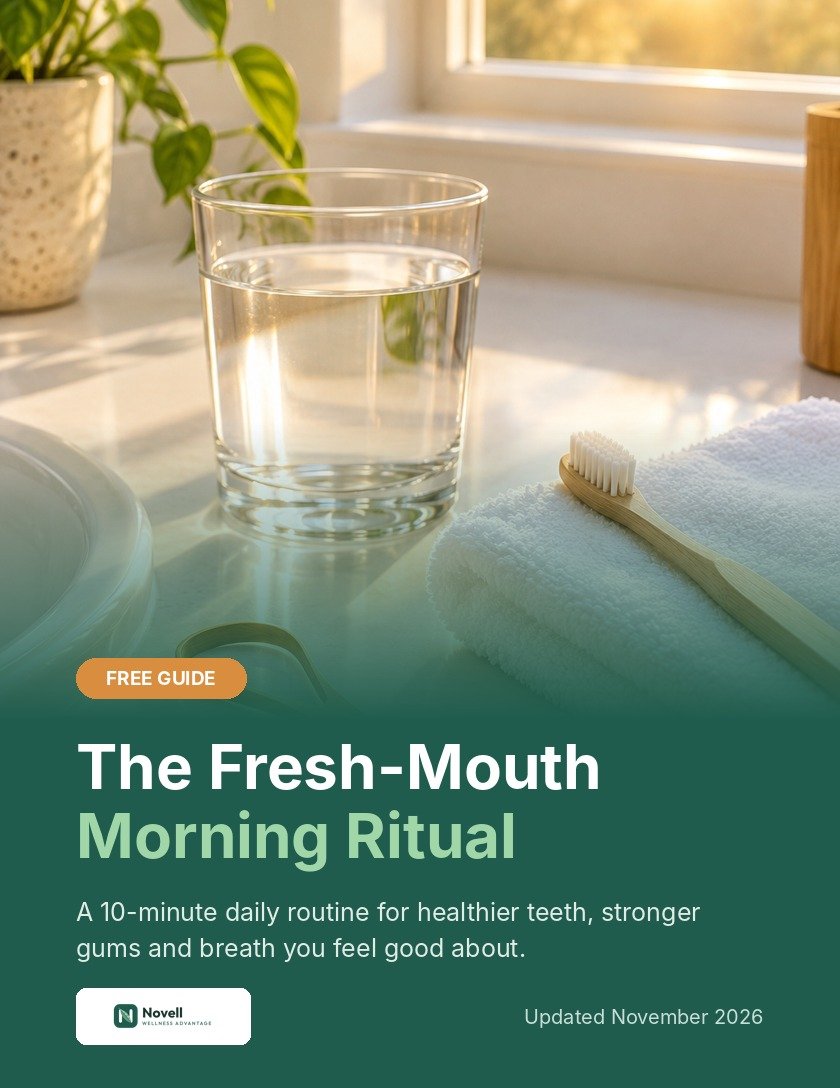
Free guide
The Fresh-Mouth Morning Ritual: A 10-Minute Daily Routine for Healthier Teeth, Stronger Gums, and Breath You Feel Good About
Download our free 10-minute morning ritual guide and build a simple daily routine that supports your teeth, gums, and breath — no expensive products required. Enter your first name and email and you’ll get it right away.
You’ll get the guide right away, plus a few short tips by email. Unsubscribe any time. Privacy Policy
Why This Particular Issue Stays Hidden
Several patterns come up again and again when women talk about why they kept a dental concern private:
‘I did not want to worry anyone.’ This is the most common reason. It sounds considerate. In practice, it often means carrying the concern entirely alone — including the anxiety about what it might mean for the future.
‘I thought it would just get better on its own.’ Waiting is a reasonable response when you are uncertain. The difficulty is that gum recession does not reverse on its own — lost tissue does not simply grow back. Watching and waiting without telling anyone means no one else is part of the decision about when to act.
‘I was embarrassed.’ Even among people who care for their teeth diligently, recession can develop. It can relate to how hard someone brushes, the natural thickness of their gum tissue, tooth positioning, or other factors entirely outside their daily habits. Embarrassment is understandable, but it is rarely deserved.
‘I did not want to hear that it means surgery.’ This is a real and valid fear. Some gum recession does eventually lead to a conversation with a periodontist about grafting procedures. But that conversation — even when it happens — is very different depending on whether it is caught early or late. Knowing sooner genuinely gives you more options.
‘I did not think my family would understand why it matters.’ For some women, the concern is not that family will overreact — it is that they will shrug it off. Dental health can feel invisible to people who are not experiencing a problem themselves, and explaining why you are worried about something that ‘is just teeth’ can feel exhausting before it starts.
How to Actually Start the Conversation
You do not need a dramatic sit-down. Most of these conversations happen best in the ordinary flow of daily life — at the kitchen table, during a walk, in the car. What matters is that you say something specific rather than vague.
Vague: ‘I have been having some dental stuff going on.’
Specific: ‘I have noticed my gums pulling back from a couple of my teeth, and it has been making them sensitive. I have been researching what gum receding treatment options are out there, and I think I need to get properly evaluated. I wanted you to know.’
The specific version does several things. It tells the other person what is actually happening. It signals that you are already taking it seriously. And it gives them something real to respond to, rather than leaving them to guess at how worried they should be.
If you are talking to a spouse:
Be direct about what you would find helpful. ‘I am not looking for you to fix it. I just did not want to be carrying this alone.’ Or: ‘Would you come to the dental appointment with me? I want a second set of ears.’ Most partners want to help but do not know what form of help is wanted. Telling them removes the guessing.
If you are talking to an adult child:
Keep the tone matter-of-fact. Adult children can tip quickly into alarm or into minimizing, depending on their personality. Something like, ‘I am handling it — I have an appointment scheduled — I just wanted you to know what is going on with me’ gives them accurate information without making them feel they need to intervene.
If you are talking to a friend your own age:
This is often the easiest conversation because there is no worry about causing parental anxiety or spousal concern. Many women your age are navigating exactly the same thing and have never said so to each other. You might be surprised by what opens up.
What You Are Actually Dealing With — A Plain Overview
For the partner or adult child reading alongside you: gum recession means that the gum tissue that normally covers the base of a tooth has pulled back, exposing more of the tooth’s surface or root. It tends to develop gradually and without pain, which is part of why it is so easy to minimize or miss. By the time sensitivity appears, some change has usually already occurred.
It does not go away on its own. The tissue that has already receded does not grow back without intervention. What is possible is stopping further progression and, depending on the degree of recession, addressing the exposed area.
Treatment varies considerably — from changes in daily habits and professional care targeting the underlying cause, to procedures that can cover exposed root surfaces in more significant cases. What is right depends on the cause, the severity, which teeth are affected, and what a dental professional assesses in person.
This is why the conversation with a dental professional matters, and why having a support person in the room matters too.
The Oral Microbiome Piece — What Often Gets Left Out of Family Conversations
One thing that tends to stay entirely inside the quiet research sessions — and never makes it into the conversation with a spouse or adult child — is the growing body of thinking around the bacterial environment of the mouth.
Researchers and dental professionals have increasingly turned attention to the balance of bacteria in the mouth as a contributing factor in gum and tooth health. The idea is not complicated: the mouth has its own ecosystem of bacteria, and when that balance shifts, it can affect the gum environment. Some daily products may disrupt that balance, while others are designed to support it.
For women in midlife and beyond who are already thinking carefully about gut health, immunity, and the connections between different body systems, this framing tends to resonate. It is worth raising with an integrative health professional or your dentist — particularly if you are already taking medications that may be affecting your mouth’s natural environment.
A Word on Taking This Seriously Without Taking It Alone
You are allowed to care about your teeth. You are allowed to put real thought into supporting your oral health, to ask your dentist specific questions about gum disease and receding gums care options, and to explore what else might be useful alongside professional care.
What you are not required to do is research all of this in private, worry about it alone, and present a fully formed plan to your family only once everything is already decided.
The people who love you would rather be part of this. Even the conversation that feels awkward to start usually lands better than you expect.
Start with one sentence. The rest tends to follow.
Supporting Your Mouth’s Bacterial Environment
Beyond professional care and habits like gentle brushing, some people are exploring ways to support the balance of bacteria in the mouth as part of their overall oral care approach. ProDentim is a chewable probiotic supplement formulated with 3.5 billion probiotic bacteria (the vendor’s figure) and a blend of additional nutrients, specifically designed with teeth and gum health in mind. The strains included — Lactobacillus Paracasei, B.lactis BL-04®, and Lactobacillus Reuteri — are described by the manufacturer as supporting the balance of mouth bacteria and a healthy mouth environment. The formula also includes Inulin, which the vendor notes supports good bacteria; Malic acid from strawberries, associated with tooth whiteness; Tricalcium Phosphate, noted for tooth health support; and Peppermint as a natural ingredient.
The vendor describes ProDentim as non-GMO, gluten free, and stimulant-free. It comes with a 60-day money-back guarantee, which is worth noting if you are considering trying it and want to do so without full financial risk.
If you are already talking to a dentist or integrative health professional about your gum health, it is worth mentioning any supplements you are considering — that is simply good practice when you are managing multiple aspects of your health.
If you would like to learn more about ProDentim and whether it might fit into your oral health routine, you can visit the product page at Novell Wellness Advantage for full details on ingredients, packaging options, and the money-back guarantee.
Visit the product page here:
Disclosure: This article contains affiliate links. If you purchase through them, we may earn a commission at no additional cost to you.
Medical Disclaimer. The content on this site is for informational purposes only and is not medical advice. It is not a substitute for professional diagnosis or treatment. Always consult a qualified healthcare provider before starting any supplement, especially if you have a medical condition or take medication.
FDA Structure-Function Statement. These statements have not been evaluated by the Food and Drug Administration. This product is not intended to diagnose, treat, cure, or prevent any disease.