
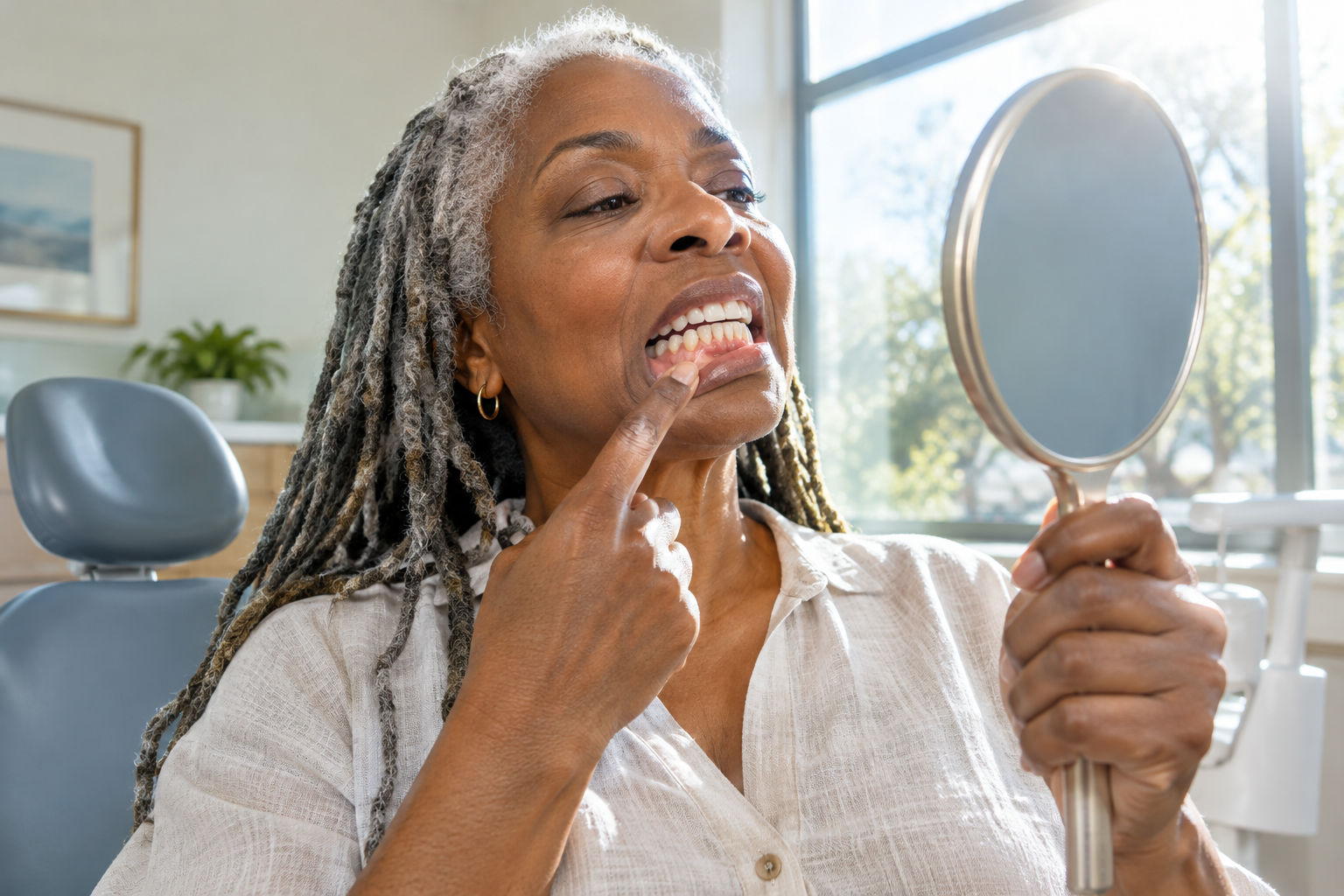
Recession Gum Line: What Another Year of Waiting Actually Costs You
Heads up: this article contains affiliate links. If you buy through them, we may earn a commission at no extra cost to you.
If you have noticed that your recession gum line seems a little more visible in the mirror than it did a year ago, you are probably not imagining it. Gum recession tends to move slowly — slowly enough that it is easy to put off, to tell yourself you will deal with it at the next dental appointment, or the one after that.
But slow does not mean harmless. And the cost of another year without addressing it is not just a dental bill. It shows up in quieter ways — in the foods you avoid, the confidence you hold back, and the moments that feel a little smaller than they used to.
This article is for the woman who already knows something is happening and is trying to understand what it actually means — not in clinical terms, but in the terms of her actual daily life.
What a Receding Gum Line Actually Is
Your gums are meant to form a tight seal around each tooth, covering the roots and protecting the softer, more sensitive tissue beneath. When that tissue begins to pull back, the root of the tooth becomes exposed.
According to Cleveland Clinic, receding gums can expose tooth roots, making them more vulnerable to sensitivity, bacteria, and decay. That exposure is not just a cosmetic issue. It changes what your teeth experience every single day — from temperature, from pressure, from the bacteria present in your mouth at every hour of the day and night.
The line where the gum meets the tooth moves downward. Teeth begin to look longer. A notch may appear near the base of a tooth. Sensitivity to cold drinks or sweet foods may become noticeable. These are not dramatic emergency symptoms. They are quiet, gradual changes — which is exactly why they are so easy to put off.
What Causes It
Gum recession rarely has a single cause. For many women in their 50s, 60s, and 70s, several factors may be working together.
One of the most common contributors is brushing too firmly. Many of us were raised to believe that harder brushing meant cleaner teeth, but years of mechanical pressure along the gum line can gradually wear the tissue away. MedlinePlus guidance recommends brushing gently with a soft-bristle toothbrush twice daily — a habit that is easy to underestimate if you have been brushing the same way for decades.
Beyond brushing technique, other contributing factors include the positioning of individual teeth, genetic predisposition to thinner gum tissue, the cumulative effects of plaque and tartar buildup along the gum line, and habits like clenching or grinding that put pressure on the gums over time.
Some causes interact with each other. A tooth that sits slightly out of alignment may be more vulnerable to mechanical wear from brushing. Thinner tissue that runs in families may respond more quickly to any of these stressors. Understanding which factors are most relevant to you is part of what a dental visit can help clarify.
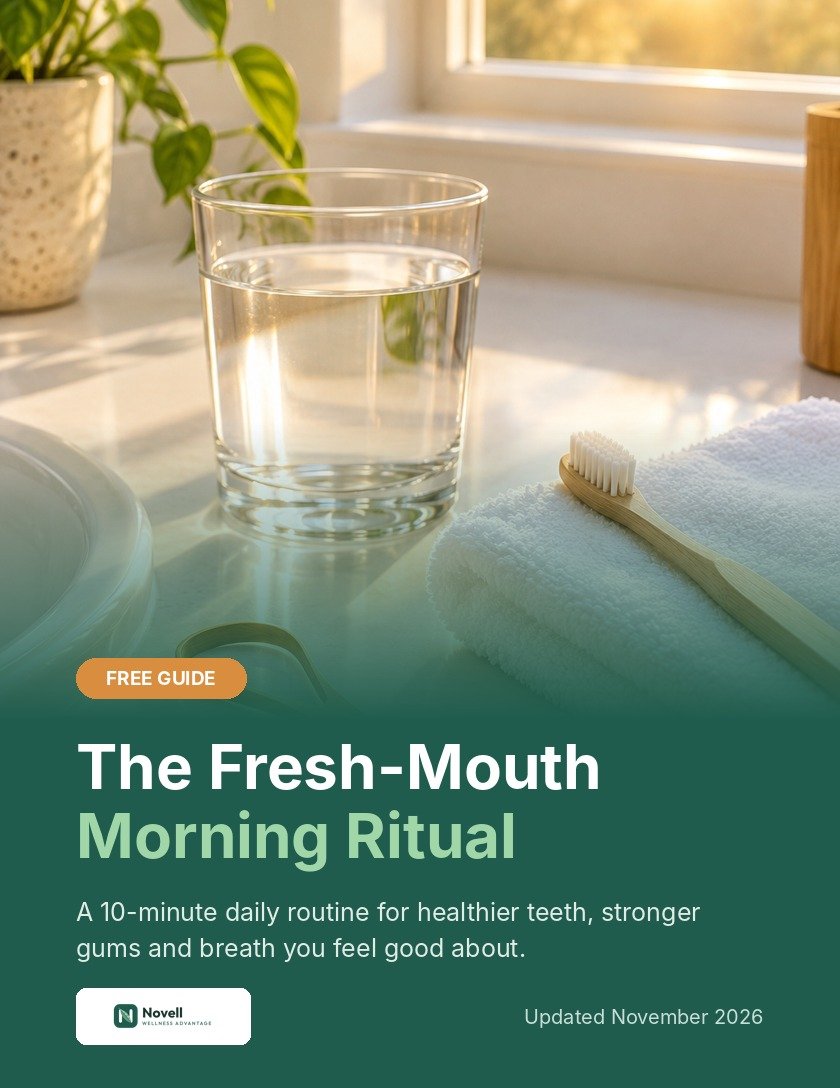
Free guide
The Fresh-Mouth Morning Ritual: A 10-Minute Daily Routine for Healthier Teeth, Stronger Gums, and Breath You Feel Good About
Download our free 10-minute morning ritual guide and build a simple daily routine that supports your teeth, gums, and breath — no expensive products required. Enter your first name and email and you’ll get it right away.
You’ll get the guide right away, plus a few short tips by email. Unsubscribe any time. Privacy Policy
Can Receding Gums Grow Back?
This is one of the questions people search most, and the honest answer is: gum tissue that has already receded does not typically regenerate on its own. Once the tissue pulls back, it does not simply return.
That distinction matters, because it changes how to think about timing. Prevention and early action are not just preferable — they are, in a meaningful sense, the whole game.
What a dentist can do depends on how far recession has progressed. For mild cases, a thorough professional cleaning to remove buildup below the gum line, combined with changes to brushing habits, may be enough to stop further progression. For more significant recession, treatment may involve procedures to cover exposed roots and restore the protective barrier — procedures that are more involved, more uncomfortable, and more expensive than what early intervention would have required.
The Part Nobody Talks About: What Another Year Actually Takes From You
There is a version of this story that is told entirely in dental charts and billing statements. But there is another version — the one you live in.
Maybe you have already started steering away from certain foods. The cold drink on a hot day that you now hesitate before sipping. The crunchy apple that you have quietly replaced with something softer. The restaurant meal where you are half-aware of which side of your mouth you are using.
Maybe you catch yourself in photos and notice your smile looks different than it once did. Not dramatically. Just — different. And you do not quite like what you see, so you smile a little less.
Maybe you have already spent money — on a sensitive-teeth toothpaste that helps a little, on a dental visit that resulted in a recommendation you have not quite gotten around to following through on, on something you read about online that seemed promising.
One more year of this does not feel like much. But it is one more year of choosing your food differently. One more year of a smile that you are managing rather than enjoying. One more year of small, daily compromises that you have stopped noticing because they have just become the way things are.
And underneath all of that, for many women, is a quieter concern: the connection between what happens in the mouth and what happens in the rest of the body. Research increasingly suggests that the balance of bacteria in the mouth is not a local issue — it is a whole-body issue. What thrives in your oral environment has implications that extend well beyond your teeth.
That concern is worth taking seriously. And it is worth asking what you are actually doing, day to day, to support the environment your teeth and gums live in.
Rethinking Your Daily Oral Care Routine
Most of us were handed a dental routine in childhood and have not revisited it since. Twice-daily brushing, perhaps some flossing, maybe a mouthwash. That is the standard picture.
But recent thinking in oral health has shifted toward the bacterial ecosystem of the mouth — the balance between the microorganisms that protect oral tissue and those that undermine it. Some research now points to the idea that this balance may matter as much as mechanical cleaning.
Common dental products are designed primarily for mechanical cleaning and freshening. What they do to the broader bacterial environment in the mouth is a different question — one that more people are beginning to ask.
If you are someone who reads widely on health, follows functional medicine conversations, or has found yourself curious about the gut microbiome and what it means for overall health, the oral microbiome is a natural extension of that curiosity. The mouth is, after all, where the digestive system begins.
A Supportive Approach Worth Knowing About
This is where ProDentim may be worth your attention — not as a replacement for professional dental care, but as something that works alongside it.
According to the vendor, ProDentim is a dissolvable tablet formulated with 3.5 billion probiotic bacteria, designed specifically to support the bacterial environment of the mouth. The vendor names three primary strains — Lactobacillus Paracasei, B. lactis BL-04, and Lactobacillus Reuteri — included to support gum health, support the balance of bacteria in the mouth, and support the broader oral environment.
The vendor states the formula also includes a proprietary blend of four plants and minerals: inulin, which the vendor says supports the growth of beneficial bacteria; malic acid found in strawberries, which supports tooth whiteness; tricalcium phosphate, which supports tooth health; and peppermint, included as a natural approach to freshness.
The vendor states ProDentim is manufactured in an FDA-registered facility, is non-GMO, gluten-free, and contains no stimulants. It is not a prescription product. The recommendation is to chew one tablet each morning.
For a woman who is already thinking carefully about what she puts in her body, already taking her oral health seriously, and looking for a research-informed addition to a thoughtful daily routine — it is a conversation worth having.
And if it turns out not to be right for you, the product comes with a 60-day money-back guarantee. That kind of stated commitment from a brand may be worth factoring in when you are evaluating something new.
The Honest Summary
A recession gum line is not an emergency. It is a gradual process. And that gradual quality is exactly what makes it easy to put off — and exactly what makes putting it off costly.
Not just financially. In small daily freedoms. In confidence. In the gap between the version of your later years you imagined and the one that takes shape if you keep waiting.
You do not have to have a dramatic dental crisis to decide that this year is the year you take it more seriously. You just have to decide that another year of small compromises is not what you want.
That decision can start with something as simple as asking better questions — of your dentist, of your daily habits, and of what you are actually giving your mouth to work with every single day.
If you are curious about ProDentim and whether it might fit into your daily oral care routine, visit our product page for a full overview of the formula, what is included, and how to get started.
Learn more about ProDentim here
Disclosure: This article contains affiliate links. If you purchase through them, we may earn a commission at no additional cost to you.
Medical Disclaimer. The content on this site is for informational purposes only and is not medical advice. It is not a substitute for professional diagnosis or treatment. Always consult a qualified healthcare provider before starting any supplement, especially if you have a medical condition or take medication.
FDA Structure-Function Statement. These statements have not been evaluated by the Food and Drug Administration. This product is not intended to diagnose, treat, cure, or prevent any disease.