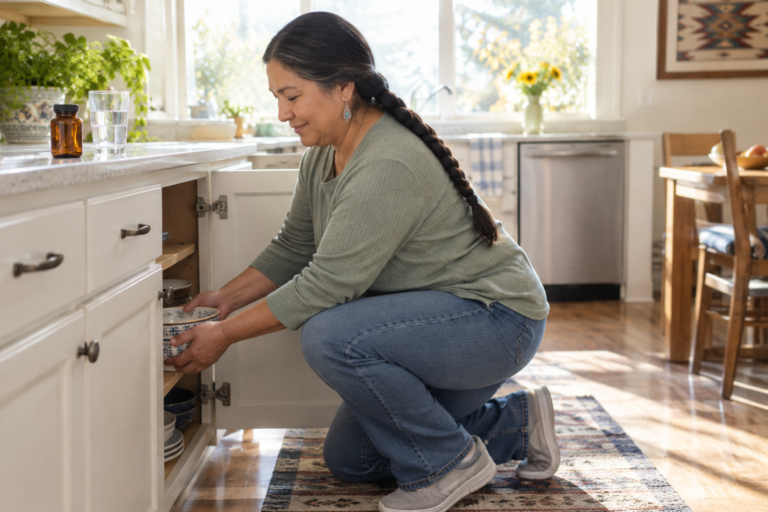

Supplement Knee Pain Routine: A Realistic Day
Heads up: this article contains affiliate links. If you buy through them, we may earn a commission at no extra cost to you.
If you have been searching for the right supplement knee pain approach, you have probably already discovered that no single pill does the whole job. The women who tend to feel the most consistent difference are the ones who build a daily structure around their joints — not just take something and hope for the best.
This article is a practical look at what that structure can look like across a full day. The supplement is one piece of it. Not the centrepiece — just one piece.
Why a Routine Matters More Than Any One Product
Joints respond slowly. They are not like a headache that lifts within an hour of taking something. The tissues inside a joint — the cartilage, the fluid that cushions and nourishes it, the surrounding muscles — all change over weeks and months, not days. That means consistency matters far more than intensity. A modest daily routine done reliably will almost always outperform a more aggressive one done in bursts.
For women in their sixties and seventies managing everyday stiffness, a routine also provides something just as valuable as any supplement: predictability. You know what to expect from your body at each point in the day, and you can plan around it rather than being caught off guard.
Here is a realistic structure.
Morning: The Hardest Part of the Day
For many women, the first thirty to sixty minutes after waking are the most uncomfortable. Joints that have been still all night need time to warm up. Do not rush this, and do not fight it with willpower alone — work with it.
Before you get out of bed: Spend two to three minutes doing gentle ankle circles, knee bends, and hip rotations while still lying flat. This is not exercise. It is simply signalling to your body that movement is coming. It gets synovial fluid circulating in the joint space before you put any weight through your knees.
Getting up: Use a firm surface if you need one. There is nothing wrong with using the side of the bed or a bedside table for support. Protecting the joint during the transition from lying to standing is smarter than struggling through it.
Warm water: A warm shower or even a warm cloth on stiff knees can help the surrounding muscles relax enough to let you move more freely. Some women find ten minutes in a warm shower in the morning is worth more than almost anything else in the routine.
Breakfast timing: Eat within about an hour of waking. A protein-rich breakfast — eggs, Greek yoghurt, nut butter on toast — helps maintain the muscle tissue that supports and protects your joints. Weak thigh and hip muscles place more load on the knee joint itself, so keeping those muscles fed matters.
Supplement timing in the morning: If you are taking a joint supplement, morning is a natural time to build the habit — taken with breakfast so it is consistently paired with something you already do. Joint Genesis, for example, is designed as a daily capsule. One line item on your morning routine, taken with food, and then you are done.

Free guide
7 Morning Moves for Stiff Joints After 45
A gentle 10-minute routine for knees, hips and hands — most of it done before you even get out of bed. Enter your first name and email and you’ll get it right away.
You’ll get the guide right away, plus a few short tips by email. Unsubscribe any time. Privacy Policy
Mid-Morning: The Best Window for Gentle Movement
Once you have been up for an hour or so and the overnight stiffness has eased, mid-morning is typically the most comfortable movement window of the day for women managing knee discomfort.
A short walk: Even fifteen to twenty minutes at a comfortable pace does several useful things at once. It keeps the muscles around the knee active, supports circulation to the joint tissue, and tends to improve mood — which matters more than it is usually given credit for when you are managing something chronic.
Surface matters: Grass or packed earth is gentler than pavement. Flat terrain is safer than hills until you feel confident. Supportive, cushioned footwear is not optional — worn-out shoes change the way load travels through your knees with every step.
What to avoid mid-morning: Kneeling on hard floors, squatting down to low shelves, or any activity that requires sustained pressure directly on the kneecap. These are not things to avoid forever, but in the early part of your day when the joint is still warming up, they are worth scheduling for later if possible.
Lunchtime: Food That Works With Your Joints
There is no magical anti-inflammatory diet, and this article will not pretend otherwise. But there are genuine eating patterns that tend to support a healthy inflammatory response in the body, and they are worth building into your regular meals without overthinking them.
What tends to help: Fatty fish like salmon or sardines two or three times a week. Olive oil as your primary cooking fat. Generous portions of vegetables, especially leafy greens, colourful peppers, and berries. Ginger — in tea, soups, or stir-fries — has a long history of use for this purpose and is also one of the ingredients included in Joint Genesis for that reason.
What tends not to help: Highly processed foods, excess sugar, and refined grains can all contribute to an environment in the body that makes it harder to maintain a healthy inflammatory response. This does not mean never having them. It means not making them the foundation of every meal.
Hydration: Synovial fluid — the fluid inside the joint that cushions and nourishes cartilage — is largely water. Mild dehydration, which is common in older adults who often do not feel thirsty even when they need fluids, can affect how that fluid behaves. Aim for regular sips throughout the day rather than large amounts infrequently.
Afternoon: Pacing and Activity Choices
Afternoon is often when energy dips and the temptation is to either push through discomfort or give up on movement entirely. Neither extreme serves your joints well.
Pacing means alternating activity with rest in a deliberate way rather than going until something hurts and then stopping. If you are gardening, work for twenty minutes and then sit for ten. If you are cooking, use a tall stool at the counter for tasks that do not require you to be standing. These are not signs of giving up — they are how experienced joint managers get more done over the course of a day.
Chair-based exercises: If your knees are uncomfortable on a given afternoon, seated leg lifts, ankle exercises, and gentle resistance band work done from a chair can keep the muscles active without loading the joint. Your local library or senior centre may have a class that covers exactly this.
Afternoon heat or cold: A heat pack on the knee for fifteen minutes can ease afternoon achiness and make the rest of the day more comfortable. Some women prefer cold after activity. There is no universal answer — notice what your own body responds to and use it.
Evening: Recovery and Preparation
What you do in the evening affects how your morning feels. This is one of the less obvious but more actionable parts of managing joint comfort.
A short walk or gentle stretch after dinner: Even a ten-minute walk after your evening meal keeps the joints from stiffening up before bed and can make the transition into sleep more comfortable.
Leg elevation: If your knees tend to feel heavy or achy by evening, fifteen to twenty minutes with your legs elevated above hip level can help. A few pillows under the calves while you watch television costs nothing and often makes a noticeable difference.
Stretching before bed: Focus on the quadriceps (the muscles along the front of the thigh), the hamstrings, and the calves. These three muscle groups directly influence how much pressure travels through the knee joint. Gentle, held stretches for thirty seconds each — not bouncing — done before sleep help maintain the flexibility that protects the joint during daily movement.
Limiting late alcohol and processed snacks: Both can interfere with sleep quality, and sleep is when much of the body’s repair work happens. Poor sleep also tends to amplify the perception of pain the following day, which creates a cycle worth interrupting.
Sleep: The Part of the Routine Nobody Takes Seriously Enough
Seven to eight hours of consistent sleep is not a luxury for someone managing joint discomfort — it is part of the care plan. During deep sleep, the body goes through tissue repair processes that matter for musculoskeletal health. Chronic poor sleep raises markers of systemic inflammation, which in turn affects how joints feel the next day.
Positioning: A pillow between the knees when sleeping on your side reduces the torque placed on the knee and hip joint overnight and can significantly reduce morning stiffness for some women. It sounds almost too simple, but the feedback from women who try it for a week is often striking.
Sleep environment: A cool, dark room with limited screen time in the hour before bed supports the kind of deep, restorative sleep that actually helps with recovery. This is not new advice, but it is chronically underutilised.
About Joint Genesis: Where It Fits in the Picture
Joint Genesis is a daily supplement formulated by Dr. Mark Weis, M.D., the Medical Research Director at BIODYNAMIX. The formula is built around Mobilee, a patented ingredient included at 80mg per serving that has been studied in multiple clinical trials. The formula also includes French maritime pine bark, ginger root, Boswellia Serrata, and BioPerine — a patented black pepper extract included to support absorption of the other ingredients.
The reasoning behind the formula centres on hyaluronan, a molecule that plays a role in the thickness and quality of synovial fluid inside the joint. The vendor’s research suggests that hyaluronan levels tend to decline with age, and that this decline is associated with changes in how the synovial fluid functions. The formula is intended to address that specific aspect of joint health.
Joint Genesis is produced in an FDA-inspected facility following current Good Manufacturing Practices. It is free from gluten, dairy, nuts, soy, egg, crustaceans, BPAs, and GMOs.
As with any supplement, speak with your doctor before adding it to your routine — particularly if you are taking other medications. That conversation is worth having before you start, not after.
The supplement is one item on the daily list above. It fits into a morning habit alongside breakfast and requires nothing else from you that day. The rest of the routine — the movement, the food, the sleep, the pacing — is what creates the environment in which any support you give your joints has a chance to be felt.
A Note on Knowing Whether Anything Is Helping
One thing the top search results rarely address well: how do you actually judge whether a daily routine is making a difference?
The most useful approach is to pick two or three specific activities that currently cause you difficulty — getting up from a chair, walking to the end of the street, kneeling to tend a low plant — and note, honestly and regularly, how they feel. Not in vague terms but in practical ones. Could you do it? Did it take longer than usual? Did you need to stop?
Keep a simple note on your phone or in a small notebook. After six to eight weeks of a consistent routine, look back at where you started. Joint changes are gradual enough that without a reference point, it is easy to either miss real progress or to overestimate it.
Patience and consistency are the two things that separate women who feel a genuine difference from those who do not — more than any single ingredient or product.
If you would like to learn more about Joint Genesis and how the formula is put together, the product page at Novell Wellness Advantage has the full details, including ingredient information and current pricing options.
Visit the Joint Genesis product page here:
As always, speak with your doctor before starting any new supplement, especially if you are currently taking medication.
Disclosure: This article contains affiliate links. If you purchase through them, we may earn a commission at no additional cost to you.
Medical Disclaimer. The content on this site is for informational purposes only and is not medical advice. It is not a substitute for professional diagnosis or treatment. Always consult a qualified healthcare provider before starting any supplement, especially if you have a medical condition or take medication.
FDA Structure-Function Statement. These statements have not been evaluated by the Food and Drug Administration. This product is not intended to diagnose, treat, cure, or prevent any disease.