Why Joint Stiffness After 45 Isn’t Just ‘Normal Aging’ — And What the Research Says You Can Do About It Now
If you’ve started your morning with that familiar slow shuffle to the bathroom — stiff hips, creaky knees, ankles that need a minute before they cooperate — you’ve probably been told the same thing: “It’s just part of getting older.”
But here’s the thing. That answer has never actually satisfied you, has it? Because you’re the kind of woman who wants to understand why something is happening, not just accept it as fate.
So let’s talk about what’s actually going on in your joints after 45 — and why acting now, rather than waiting for things to get worse, may be one of the smartest wellness decisions you make this year.
What’s Actually Happening to Your Joints in Midlife
Your joints are cushioned and lubricated by a gel-like fluid that keeps the cartilage surfaces from grinding against each other. A key molecule responsible for maintaining this fluid’s thickness and shock-absorbing quality is hyaluronan — a naturally occurring compound your body produces on its own.
Here’s where it gets interesting: research suggests that hyaluronan production begins to decline meaningfully as we age, with some studies indicating a significant drop-off beginning around age 30 and accelerating through the 40s and 50s. As levels fall, the synovial fluid — the lubricant inside your joints — becomes thinner and less effective.
The result? That stiffness after a yoga class that wasn’t there five years ago. The ache in your knees after a long hike. The morning soreness that takes longer and longer to work itself out.
This isn’t weakness. It’s biology — and more importantly, it’s something that can potentially be supported.
Why the “Wait and See” Approach May Cost You More Than You Think
Many women in their mid-40s to late 50s notice early joint changes but don’t take action because the discomfort isn’t yet severe enough to feel urgent. This is completely understandable — and it’s also exactly when researchers and functional medicine practitioners suggest intervention may be most effective.
Think of it like bone density. The best time to support bone health isn’t after a fracture — it’s in the years when the gradual decline is just beginning and your body is most responsive to nutritional support. Joint health works similarly. The cartilage and synovial tissue that cushion your joints don’t regenerate easily once significantly degraded.
If you’ve watched a parent or older friend go through the slow loss of mobility — the activities they stopped enjoying, the trips they couldn’t take, the grandchildren they couldn’t keep up with — you already understand intuitively why getting ahead of this matters.
The Perimenopause Connection Most Women Don’t Know About
If you’re in perimenopause or have recently entered menopause, there’s a specific reason your joints may have changed noticeably in recent years that goes beyond simple aging.
Estrogen plays a meaningful protective role in joint tissue. It helps regulate inflammation, supports collagen production, and may influence the health of your synovial membranes. As estrogen levels fluctuate and eventually decline during perimenopause, some women experience a notable increase in joint stiffness and discomfort — often at the same time as other symptoms like sleep disruption and mood changes.
This is one of the reasons that women who were completely comfortable and active in their early 40s can find themselves surprised by joint issues in their late 40s or early 50s. It’s not that they did something wrong. The hormonal shift created new vulnerabilities that weren’t there before.
Understanding this connection is empowering — because it means you’re not imagining things, and there are evidence-informed steps you can take.
What the Research Suggests May Help
Given what we know about hyaluronan depletion and its role in joint comfort, researchers have explored whether supplementing with certain bioavailable forms of hyaluronan — combined with supporting nutrients — could make a meaningful difference.
One study published in a peer-reviewed nutrition journal examined participants who supplemented with a specific form of hyaluronan over a multi-week period. Participants reported improvements in joint comfort and flexibility compared to a control group. It’s worth noting that study results vary, individual responses differ, and supplements are not a substitute for medical care — but the findings were notable enough to generate continued research interest.
Beyond hyaluronan, nutrients like astaxanthin — a potent antioxidant found in certain algae and marine sources — have also been studied for their potential role in supporting a healthy inflammatory response in joint tissue. Some research suggests astaxanthin may help mitigate oxidative stress in connective tissue, though as always, results across individuals vary.
The key principle that functional medicine practitioners increasingly emphasize: if you wait until your joints are already severely damaged to start nutritional support, you’ve missed the window where that support can be most effective. The goal is to nourish and maintain healthy tissue — not try to reverse advanced deterioration.
What a Proactive Joint Health Routine Actually Looks Like
If you’re in the 45-58 range and you’re starting to notice the early signs — stiffness after workouts, aching in the morning, joints that take a little longer to warm up than they used to — here’s what an evidence-informed, proactive approach might include:
1. Prioritize anti-inflammatory nutrition.
Foods rich in omega-3 fatty acids — fatty fish, flaxseed, walnuts — are consistently associated with lower markers of inflammation in population research. This doesn’t mean overhauling your diet overnight; it means making these foods a consistent part of your regular rotation.
2. Don’t skip strength training.
Muscle tissue around your joints acts as a secondary support system. Stronger quadriceps, for example, reduce the load placed on your knee joints during daily movement. Resistance training two to three times per week is broadly recommended by physical therapists and sports medicine researchers for long-term joint health.
3. Manage high-impact stress on joints.
This doesn’t mean avoiding all high-impact activity — it means being strategic. If you’re a runner, adequate warm-up, supportive footwear, and alternating with lower-impact activities like cycling or swimming can help reduce cumulative wear.
4. Consider targeted nutritional support.
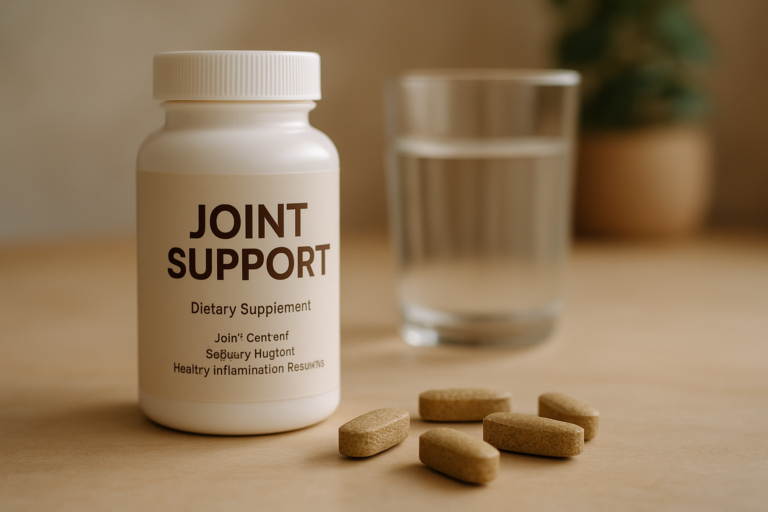
This is where supplements with a research backing — particularly those containing bioavailable forms of hyaluronan — may play a supporting role in a comprehensive joint health strategy. The research is not conclusive for everyone, but for women in midlife who are proactively trying to protect their joints, it represents a meaningful option worth evaluating.
The Bottom Line: Early Action Is the Smart Move
You’re not the kind of person who waits for a problem to become a crisis before addressing it. You research. You plan. You invest in your health the way you invest in your professional development or your financial future — with the understanding that small, consistent choices compound over time.
Your joints at 65 will largely reflect what you chose to do — or not do — for them in your late 40s and 50s. The stiffness you’re feeling now isn’t a sentence; it’s a signal. And you’re exactly the kind of person who listens.
If you’re curious about what a targeted joint health supplement with researched-backed ingredients looks like, we’ve reviewed one option that’s been getting meaningful attention in the functional wellness community — and we break down exactly what’s in it and why it was formulated the way it was.
Ready to take a proactive approach to joint health before the small aches become bigger limitations?
We’ve reviewed Joint Genesis — a supplement formulated specifically to support synovial fluid quality and joint comfort through a combination of bioavailable hyaluronan and complementary nutrients. Click below to read our full breakdown of the ingredients, the research behind the formulation, and whether it may be a fit for where you are in your wellness journey.
→ Learn More About Joint Genesis Here: https://novellwellnessadvantage.com/joint-genesis-support-healthy-joints-naturally/
As always, we recommend speaking with your healthcare provider before adding any new supplement to your routine — especially if you are currently taking medications or managing a health condition.
Disclosure: This article contains affiliate links. If you purchase through them, we may earn a commission at no additional cost to you.