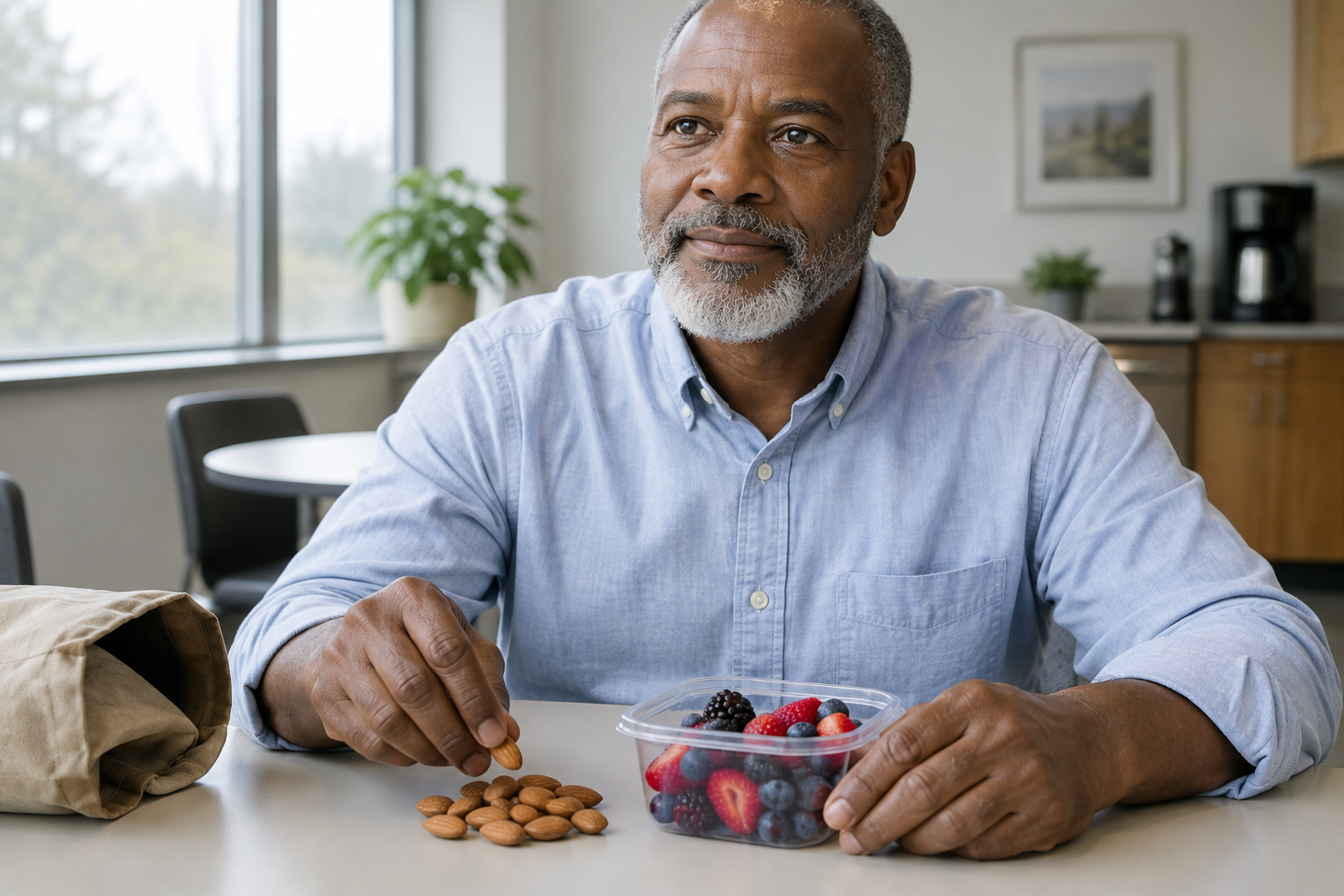
How Can You Stop Sugar Cravings for Good?
Heads up: this article contains affiliate links. If you buy through them, we may earn a commission at no extra cost to you.
You already know the drill. Lunch wraps up, the afternoon hits, and something in your brain starts demanding a candy bar, a soda, or whatever is sitting in the break room. How can you stop sugar cravings when they show up like clockwork, every single day, regardless of what you ate for lunch?
The short answer is that consistent cravings almost always have a cause — and that cause is worth taking seriously, especially if you have a family history of blood sugar issues. But before we get to what you can do about it on your own, let’s talk about something most guys skip entirely: the five-minute conversation with your doctor that could actually change the trajectory of your health.
Why Most Men Never Bring This Up
If you are in your mid-40s or 50s and your fasting glucose has been ‘creeping up,’ you are not alone. A lot of men in that position know something is off but do not want to walk into a doctor’s office and say ‘I have been craving sugar.’ It sounds vague. It sounds like a willpower problem. It does not sound like something a doctor can fix.
Here is the reality: recurring, hard-to-control cravings can be a signal worth flagging. Cleveland Clinic guidance suggests talking with a healthcare professional when cravings are difficult to control or are affecting your eating habits. That is a low bar — and most men who hit it never actually cross it.
The problem is not knowing what to say when you get there.
What to Ask at Your Next Appointment — A Practical Script
Most primary care visits run 15 to 20 minutes. If blood sugar is not your stated reason for being there, it will not come up. You have to bring it up yourself, and you have about 60 seconds to frame it before the conversation moves on.
Here is language that works:
Opening line (say this first, before anything else):
‘I want to add one thing to today’s visit — I have been having pretty consistent sugar cravings in the afternoons, and my energy crashes after lunch. Given my family history, I want to understand what my numbers are telling me.’
That one sentence does three things. It signals that this is not a vague complaint. It connects the symptom to a concrete risk. And it tells the doctor you want data, not just reassurance.

Free guide
The Steady-Energy Plate: How to Build Meals That Don't Crash You by 3 PM
A simple way to build everyday meals that help you feel steady through the afternoon — no strict diet, no special foods. Enter your first name and email and you’ll get it right away.
You’ll get the guide right away, plus a few short tips by email. Unsubscribe any time. Privacy Policy
Follow-up questions to have ready:
1. ‘What does my fasting glucose number actually mean for someone my age?’
Most men get a number on a lab printout and nobody explains what range to watch. Ask directly.
2. ‘Is my A1C something we should be tracking at my age, given my history?’
If your doctor has not ordered an A1C recently, this question puts it on the table without being confrontational.
3. ‘What does a craving that hits every afternoon at the same time tell you, clinically?’
This invites the doctor to explain the pattern rather than dismiss it.
4. ‘If my numbers are in a gray zone, what do you want me to watch for between now and my next visit?’
Gray-zone numbers often get a ‘let’s keep an eye on it’ response. This question forces a more specific answer.
5. ‘Are there dietary changes that target glucose response specifically — not just generic ‘eat less sugar’ advice?’
General advice to cut sugar is not useful. Ask for specifics: meal timing, protein distribution, what to eat before or after certain activities.
What to say if the doctor seems rushed:
‘I know we are short on time — which of these would you want to flag first?’ This signals you respect the time constraint and keeps the visit productive.
Getting a Useful Answer, Not Just a Reassuring One
Doctors are trained to manage acute problems. Cravings and energy crashes that have not yet produced alarming numbers tend to get acknowledged and filed away. To get a useful answer instead of a reassuring one, be specific about impact:
- ‘My afternoon crashes are affecting my ability to focus from about 2 to 4 PM — that is a real productivity problem for me.’
- ‘I have cut back on obvious sugar and it has not changed the cravings. That is what concerns me.’
- ‘I am not asking because I want medication. I want to understand the mechanism so I can address it.’
That last line matters. A lot of men avoid bringing up these symptoms because they fear the conversation will end with a prescription. Telling your doctor upfront that you are looking for understanding — not a quick fix — usually opens a more collaborative conversation.
What You Can Do in the Meantime
While you are waiting for your next appointment, there are practical steps that consistently appear in mainstream guidance on how to stop sugar cravings:
Eat before you are hungry. Skipping breakfast or pushing lunch late sets up the afternoon crash. Balanced meals with fiber and protein are one of the most consistently recommended tools for reducing cravings throughout the day — not willpower, structure.
Distinguish the type of craving. Ask yourself: Is this hunger? Thirst? Stress? Boredom? Habit? Each one has a different answer. If you are genuinely hungry, protein and fat will address it. If you are stressed and reaching for something sweet on autopilot, a 10-minute walk or a change of location often breaks the loop more effectively than any food choice.
Understand the hidden-sugar problem. Processed work snacks, flavored drinks, sauces, and fast food often contain far more added sugar than is obvious. Cravings that seem to persist despite ‘eating clean’ sometimes trace back to these sources keeping the cycle going.
Handle the late-night version differently. Cravings after dinner are often habit-based. A consistent wind-down routine — no screens, a hot drink, something that signals ‘this is the end of eating for the day’ — tends to be more effective than trying to white-knuckle through it.
Don’t go cold turkey if it makes you miserable. An all-or-nothing approach often backfires. Allowing a small portion of something you want — intentionally, not reactively — tends to produce better long-term outcomes than complete restriction that collapses under stress.
How Do I Stop Sugar Cravings When Stress Is the Trigger?
This is probably the most common situation for men in demanding jobs or running their own business. Work pressure triggers cortisol. Cortisol can influence your body’s demand for quick energy. The result feels like a craving but is actually a stress response wearing a craving’s clothes.
The solutions here are less about food and more about the pressure valve:
- A 10 to 15-minute physical break — even walking to a different floor — can interrupt the cycle.
- Keeping a protein-based snack available during peak-stress hours reduces the chance of defaulting to something sweet out of desperation.
- Recognizing that the craving usually peaks and passes within 15 to 20 minutes if you do not feed it immediately gives you a window to redirect.
This does not mean the craving problem is ‘just stress.’ Stress that consistently drives sugar intake can have real downstream consequences on glucose patterns over time — which is exactly why it is worth raising with your doctor.
When Self-Management Is Not Enough
Most resources on how to stop sugar cravings focus on behavioral and dietary tweaks. Those matter. But if you have been consistently applying them and the cravings are not responding — or if they are getting worse — that is a signal worth flagging professionally rather than grinding through alone.
Persistent, hard-to-control cravings, especially paired with afternoon fatigue and a family history of blood sugar issues, are worth a real clinical conversation. Not an urgent care visit. Not a supplement swap. A direct conversation with someone who can look at your actual numbers.
One More Tool Worth Knowing About
If you are already doing the right things with meals and stress and you are curious about whether a supplement could support your glucose management as part of a broader approach, there is one option worth looking into.
Gluco6 is a natural, non-GMO capsule formula that includes ingredients such as Sukre, Gymnema, Chromium, Cinnamon, Green Tea, and TeaCrine — a combination the vendor describes as designed to support healthy blood sugar levels and GLUT-4 receptor function. According to the vendor, it is manufactured in an FDA-registered, GMP-certified facility in the USA, and is free from soy, dairy, and stimulants.
It is not a substitute for a doctor’s input, and it is not positioned as a replacement for any prescribed approach. It is one tool that some men add to what they are already doing — worth a look if you are at the stage of researching what your options actually are.
You can read the full product breakdown at the link below.
If you want to look at Gluco6 more closely before deciding anything, the product page has ingredient details, usage guidance, and pricing options in one place.
Read the Gluco6 product page at Novell Wellness Advantage
As always, talk to your doctor before changing anything about how you manage your health — especially if you are already working with a healthcare professional on your numbers.
Disclosure: This article contains affiliate links. If you purchase through them, we may earn a commission at no additional cost to you.
Medical Disclaimer. The content on this site is for informational purposes only and is not medical advice. It is not a substitute for professional diagnosis or treatment. Always consult a qualified healthcare provider before starting any supplement, especially if you have a medical condition or take medication.
FDA Structure-Function Statement. These statements have not been evaluated by the Food and Drug Administration. This product is not intended to diagnose, treat, cure, or prevent any disease.